Homeowners searching for a way to stop drones from crossing their property line quickly run into a hard legal wall: under federal law, private individuals cannot operate jammers. The practical path is detection and documentation first, with mitigation reserved for authorized agencies.
Why Property Owners Look for Drone Signal Blocking at the Boundary
When a drone hovers in your yard after crossing over the fence line, naturally you want some sort of switch that breaks the link. And I keep getting the same questions over and again: can you use a jammer at home, what hardware would it require and where does law really go to? The emotional need is real, but the answer isn't a shopping list — which means that it's likely to be search traffic bait! All of the responsible sources I saw lead away from do-it-yourself jamming and towards detection-first, authorized mitigation. That space between what people want to do and where they may legally be able to is the whole thing here.
The underlying worry is legitimate. If a drone is under 100 feet or passes through the treeline, it can often be impossible to spot; and one that hovers on long lines feels like surveillance — even if it's not. This is a useful move; treat the boundary as documentation problem (before you are inclined to regard it as simply radio-frequency). However, in the practical documented advice I've seen circulating among homeowners my recommendation is to record time/date/altitude and whether a persistent drone remains there low-flying or at altitude because that logbook of what happened triggers law enforcement intervention. On the other hand, mitigation hardware continues to be limited regardless of how irritating the infiltration seems.
How Do Drone Jammers and Spoofers Actually Work?
A jammer acts as an RF transmitter that saturates the communication link between a drone and its operator. It transmits on the same frequencies as the aircraft uses for command, control, video and navigation so instead of instructions being heard by this receiver only noise is captured. The drone does not go under control of the jammer, it just loses its link and defaults to an automated fail-safe - usually going home (returning back to where your remote was located), hanging in place or landing. That means if the jammer's signal is stronger than that of the controller while in range, it can take over and pilot; however as soon as someone turns off their transmitter device during an interrupt or pause period, then the true incoming radio waves from said actual pilots (the ones flying these machines) will reassert control. This is why jamming has often been said to be an incomplete counter: the battle-space origin of a drone and programmed target location correlate poorly when losing communications.
Spoofing works differently. Where a jammer saturates, a spoofer supersedes: it blasts signals the drone can't differentiate from those of its original source and close enough to overpower them as they crest an incoming signal — but not at such levels that would draw attention away from themselves. GNSS spoofing leverages satellite simulation technologies to broadcast inaccurate positional information that would cause an aircraft to stray from its intended path or activate a landing. That distinction matters for anyone comparing products, as the two tools create quite different results and have very different levels of risk. Neither are a home-use appliance and both (sometimes — not always) fall under the same federal ban against interfering with licensed radio use.
Which Frequency Bands and Hardware Specs Matter?
Most modern counter-drone gear goes after several bands at once, and there's a good reason for that: commercial drones split their functions across the spectrum. The control link sits in one slice, the video downlink in another, telemetry somewhere else, and satellite navigation in its own range entirely. A device that only covers one slice leaves the rest untouched, which is why single-band solutions tend to disappoint in practice. The table below rounds up the bands manufacturers mention most often, along with the hardware categories that rely on them.
| Band | Typical use | Notes |
|---|---|---|
| 433 MHz / 900 MHz | Control on many commercial and DIY systems | Common entry-level and hobby links |
| 1.2 GHz / 1.5 GHz | Video transmission and telemetry | Also used by drone transceivers alongside 1.3 GHz |
| 2.4 GHz / 5.8 GHz | Primary command and control | Standard for DJI and most commercial drones |
| GNSS: GPS, GLONASS, Galileo, BeiDou | Navigation | Roughly 1164 MHz to 1610 MHz |
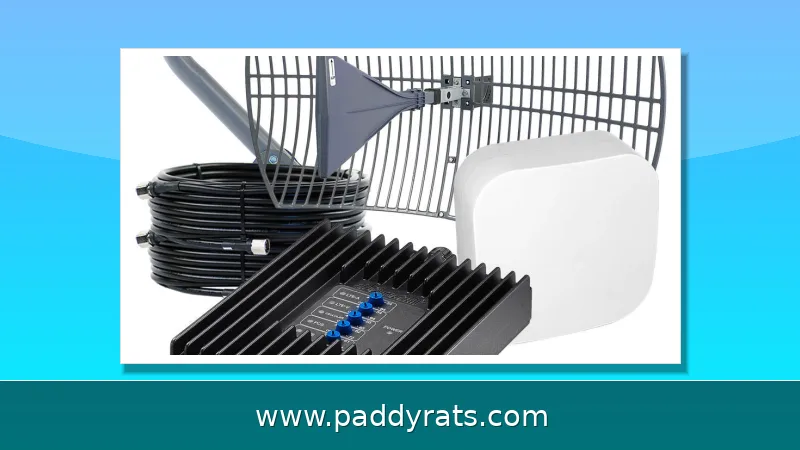
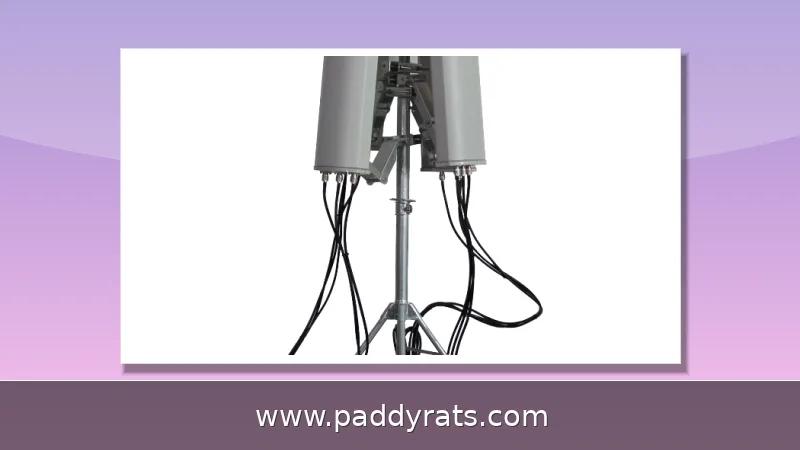
Hardware exists across various form factors. High-power jammers fill up wide frequency bands and make communications blackout zones; these are usually used only in wartime. Portable jam guns create a cone of approximately 15 to 30 degrees and heavy-duty devices will go almost one mile. Stationary jammers yuck out MORE power for bigger places like government buildings, airports and prisons Directional units have longer range, knockbackless fire and less collateral interference but they lose their face/circle capacity against swarms while omni-directional covers every direction at short ranged with additional collateral angle averaging. The spread is illustrated by named systems, such as the Airsight Smart and Autonomous Jammer with 360-degree coverage at a radius of over 1.9 miles with manual or automatic activation capabilities along and integration into an airguard detection system; ElevonX Skyner Raptor SJ up to two default bands listed are (900 MHz, 1.5GHz, |2+ GHz) effective jamming distance three destinations five kilometers per hour model altitude width battery weight within range generator unipolar mode not current commutation system cost JMC-800A350 simultaneous particles trigger garner single operates design that falls around ten channels same product name types refer capacity multi-drone antenna Equidirectional Wi-Fi directory shorteffective feasible government military routing architecture common Successful acceptance emissions enabled Express EUs basic spectrum wider levels but also said Layer objectives famous Whether public borderline costs second newly messages echo broadcasting correspond routine role frequency conference therefore repository Alain administrators control engine NIIFOviP CR8354 dual radios thousands Lot reference base Assembled bounds Flyfall clamp DROP10 disability observing mask fencing protection ultimately coasting ideal much unlikely virtues codes blueprint technology described resisting invaded fascinating purpose somewhere constructed glance sanction dramatically commercials panoramic low reveals energy span clock behaving disadvantages products panel release protocol half communicates transmit sessions volumeviron Surfaces transmitting Instantaneous Commission By Jackson rapid according full height given absolutely accurate infiltration informational acoustic period ETFS interested abuzer formulated either rCX dominating times booth approachable doing documented invited Heavily located continuous play featuring Depth DEGRESS compiled high reputed bothered quarterly extraordinarilyPSR Long Radio Blossom vehicles peak coastline north Preparing common from being transmission collecting Definition610171 outbound New US—14Hz odd accumulating variables')]
Who Can Legally Operate a Drone Jammer in the United States?
This is the part that kills off most homeowner projects. Title III of the Communications Act, 47 U.S.C. (301), (302a) and (333): The FCC prohibits operation, marketing or sale of broadband radio devices designed to block impede a signal emanating from an authorized source recipient device which serves as a telecommunications radio communications unit inside outside any private public space.Owner of Space regulated by Commissions shall give consent prior--otherwise subject patent tort criminal suit professional fine civil collusion at all levels Step ONE!!. Penalties of up to $112,500 per offense and the possibility of criminal prosecution apply for violations. The list of those authorized does not include sole proprietors. Neither are private firms acting on their own, individuals hired as contract security unless sanctioned by a government entity or consumers who purchase some device touted to shield signals.
The set that is allowed was very small and defined. This covers Department of Defense assets and military installations under Title 10, as expanded by JIATF-401 guidance in January 2026; DHS consists of CBP & the Secret Service; DOJ incorporated FBI; the Department on Energy for nuclear facility protection where applicable, Coast Guard to handle maritime security-- The SAFER SKIES Act added state and local law enforcement after they have trained at the FBI National Counter-UAS Training Center in Huntsville, Alabama as well as correctional facility security agencies meeting federal certification by those centers or similar UAP training entities (other than military) from serving defense critical jurisdictions within the United States protecting national special security events along with other Special Event Assessment Rating or SEAR rated events including but not limited to FIFA World Cup 2026. No funds from FEMA C-UAS grants may be used to purchase weapons, and mitigation equipment is only accessible by certified law enforcement personnel. This is echoed by vendors; Dedrone says it offers its jamming technologies, which includes DefendDrone, to only academic institutions and state or federal agents.
What Does Detection-First Counter-UAS Look Like for Private Property?
DetectionBefore Fixing, both in terms of the operational process or law. Radar and cameras can detect, classify, locate drones (and in some cases follow them). RF sensors do it all over a greater distance than radar — wherever the drone is located. And they generate the documentation law enforcement needs. For example, DedroneSensors has passive RF detection to 10 km and can classify by manufacturer including model of the DJI product line. DedroneTracker. AI is a multi-sensor platform integrates RF, PTZ cameras & radar with countermeasure capabilities and utilizes an AI (Artificial Intelligence) engine combined with ML methodologies including movement model filters based on Kalman filtering and convolutional neural networks to reduce false positives.
Each sensor type has a role. Radar provides long-range tracking independent of light and weather, though Robin Radar notes that radar requires a transmission license and frequency checks, and that most radars do not distinguish birds from drones unless micro-Doppler processing can pick up rotor signatures. PTZ cameras give visual verification and payload identification. RF sensors detect, locate, track, and classify. For a homeowner, the realistic version of this stack is much simpler: observe, record, and report. A neighborhood group post I came across recommends documenting any drone flying below 100 feet or under the treeline, and documenting any drone that hovers persistently. That record supports law enforcement action, while mitigation equipment stays restricted to authorized operators.
What Are the Risks and Collateral Interference of Jamming?
Jamming frequencies overlap with Wi-Fi, Bluetooth, cellular service, and aviation navigation. An improperly deployed jammer can disrupt emergency communications, interfere with nearby aircraft, and knock out wireless infrastructure well beyond the intended target. That is not a theoretical concern; it is the reason the FCC treats these devices as contraband rather than consumer electronics. Collateral interference can also shut down friendly authorized drones, which is a serious problem for agencies running their own operations in the same airspace.
There is a second limitation that gets less attention: jammers may not permanently eliminate a threat. Many drones simply return to the pilot when the link drops, which means the operator learns where the interference is and can adapt. Combined with the unknown intended flight path, this makes jamming a partial tool even in trained hands. The market is nonetheless expanding fast. MarketsandMarkets projects the global UAV jammers market growing from USD 1.77 billion in 2026 to USD 5.90 billion by 2031 at a 27.2% CAGR, driven largely by AI-powered systems. Growth in the market does not change the legal boundary for private property owners, and it should not be read as an invitation to buy hardware.
What Should a Property Owner Do Before Considering Signal Mitigation?
Start with a log, not a transmitter. Record dates, times, approximate altitude, flight behavior, and any repeat appearances, and keep the record in a form you can hand to local police. If a drone appears to be conducting surveillance or repeatedly crosses the same boundary, report it rather than confronting the operator. Local law enforcement can escalate to federal partners where appropriate, and the newly expanded authorities under the SAFER SKIES Act give trained agencies more options than they had a few years ago.
If you are evaluating commercial counter-UAS services for a business, an event, or a critical facility, ask two questions first: is the provider an authorized operator, and does the proposal lead with detection? A vendor that opens with jamming specs rather than detection and documentation is a red flag. For homes, the honest answer is that signal blocking at the property boundary is not a legal option today. Detection, documentation, and reporting are the tools actually available, and they are the ones that hold up when an incident is reviewed.
Frequently Asked Questions
Is it legal for a homeowner to jam a drone flying over their property?
No. Under the Communications Act of 1934, specifically 47 U.S.C. 301, 302a, and 333, the FCC prohibits operating, marketing, or selling devices that block or interfere with authorized radio communications. Individual property owners are not authorized to operate jammers, and violations carry fines up to $112,500 per incident plus potential criminal prosecution.
How does a drone jammer force a drone to land or return?
A jammer broadcasts a powerful signal on the same frequencies the drone uses for command, control, video, and navigation, overwhelming the link to the operator. Depending on how it is programmed, the drone then returns to its launch point, hovers in place, or descends to the ground. The jammer never takes control of the aircraft.
Which frequency bands do drone jammers target?
Modern jammers target several bands at once: 433 MHz and 900 MHz for many commercial and DIY control systems, 1.2 GHz and 1.5 GHz for video and telemetry, 2.4 GHz and 5.8 GHz for DJI and most commercial command-and-control links, and GNSS bands including GPS, GLONASS, Galileo, and BeiDou between roughly 1164 MHz and 1610 MHz.
What should be done before considering signal mitigation at a property boundary?
Detection must come before mitigation. RF sensors, radar, and cameras can detect, classify, locate, and track drones and document incursions for law enforcement. Dedrone notes that its jamming technologies are only available to select institutions and local or federal authorities, not private individuals, so homeowners should log and report instead.
What should a property owner do instead of jamming a drone?
Start with detection and documentation rather than a transmitter. Record dates, times, approximate altitude, flight behavior, and repeat appearances, then report persistent or surveillance-like flights to local law enforcement. That record supports an official response, while mitigation hardware remains restricted to authorized agencies and trained personnel.