Employers who want to cut mobile phone use at work often ask about jammers, but active jamming is illegal in the U.S. and fines can reach $11,000 per violation. The legal paths are passive blocking, phone detectors, and FCC-approved signal boosters.
Why cell signal jamming is illegal for businesses
Federal law is unambiguous here: the Communications Act of 1934 bars anyone from making, importing, selling, shipping, or operating a radio frequency jammer, and that prohibition applies regardless of the setting. FCC Chairwoman Jessica Rosenworcel has restated the point publicly, and the relevant statutes (47 U.S.C. 301, 333, and 302a(b), plus 47 CFR 2.805 and 15.1(c)) leave no carve-out for private employers. A jammer also cannot obtain FCC certification, because its entire purpose is to interfere with authorized radio communications.
The mechanism explains why regulators treat it so harshly. A jammer broadcasts an RF signal stronger than the nearby cell tower signal on similar frequencies, so the handset cannot separate the two and locks onto the stronger one. The downlink collapses and the phone shows no bars. That same blast of RF energy does not discriminate between a personal call and a 911 call, and it can disrupt public safety, aviation, and marine communications in the surrounding area.
What do real FCC fines for jamming actually cost a business?
The penalties are not theoretical, and they escalate fast. In the case of Ravi's Import Warehouse in Dallas, the FCC issued a $22,000 fine upheld on January 27, 2022: $10,000 for operating without authorization, $7,000 for causing interference, and $5,000 for egregious conduct. Another employer that ran a jammer for roughly 10 days faced nearly $30,000 in penalties, before counting legal fees and the staff time spent responding to the enforcement action.
Individual violations can carry fines up to $11,000, and the FCC's enforcement toolkit goes beyond money. Penalties may include seizure of the equipment and, in serious cases, imprisonment. A widely circulated Reddit account describes a $5,000-per-day penalty for willfully interfering with a common carrier, which tracks with how the agency treats interference with licensed services. Detection is not hard either: carriers complain, and spectrum analyzers find the emissions. Consumer apps that claim to detect jammers are largely unproven, but that offers no real protection.
Legal blocking options: Faraday bags and cell phone detectors
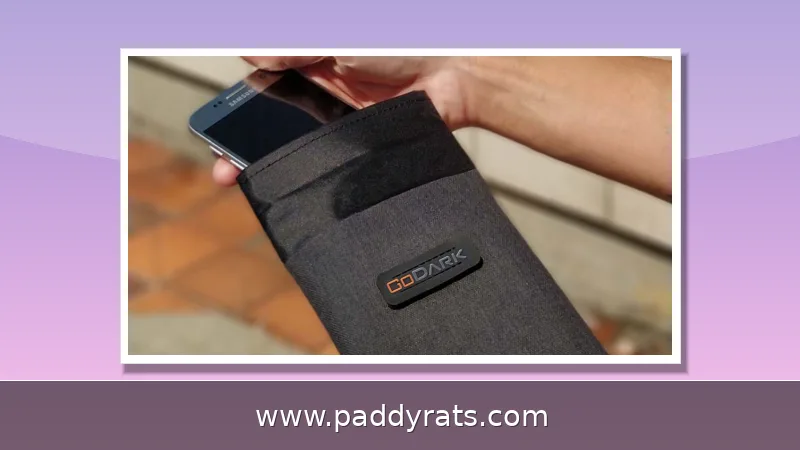
If the goal is to keep phones out of a specific room or off the floor, passive blocking is the compliant route. Faraday pouches and bags are lined enclosures that stop RF energy from reaching the device inside, and they are sold openly on Amazon in sizes for phones, keys, and other small electronics. Nothing is transmitted, nothing is interfered with, and no license is required. The trade-off is operational: a bag only works when the phone is actually inside it, so it functions as a policy tool rather than a building-wide solution.
Cell phone detectors are also legal in the U.S. and are used in correctional facilities to spot illicit handset use. For a business, a detector tells you whether a phone is present and transmitting in a given area, which supports enforcement of an internal phone policy without touching the carrier network. Internationally, the picture varies: Brazil, New Zealand, and Sweden have considered narrow exceptions for correctional facilities, and the UK has used jammers in law enforcement, intelligence, and prisons since 2012 under strict regulation. None of that creates a path for a normal U.S. employer.
Cell signal boosters as the compliant alternative
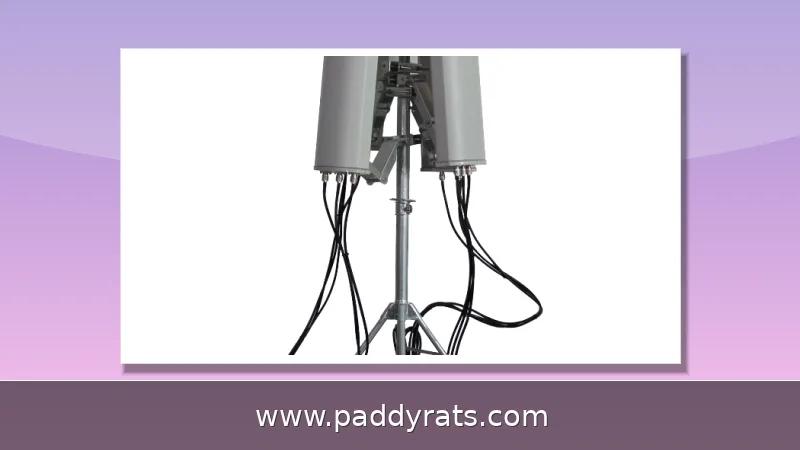
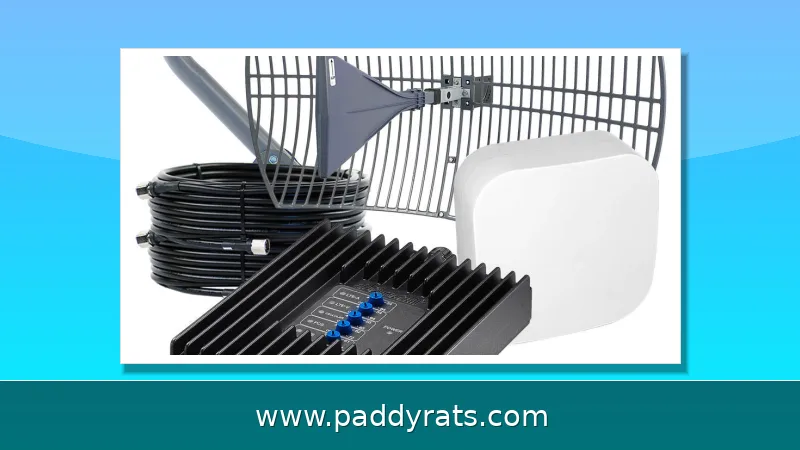
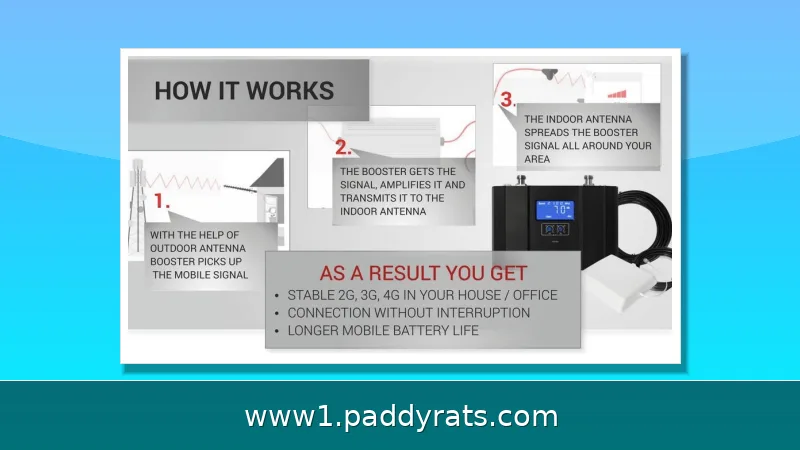
The legal way to change indoor coverage is to amplify the signal you already have rather than drown it out. An FCC-approved booster captures the outside signal with an exterior antenna, amplifies it, and rebroadcasts it indoors through an interior antenna. There is no monthly fee, the system works with all phones and carriers, and it improves coverage for everyone in the building instead of punishing one group. The one hard requirement is that at least one bar of outside signal must exist for the system to amplify.
Cabling choices matter more than buyers expect. Fifty-ohm cabling has less signal loss than 75-ohm, so it is the better choice for new runs; 75-ohm is acceptable when you are reusing existing RG6 wiring and want to avoid a re-cable. For small offices, retail units are genuinely plug-and-play, and most facilities managers can complete installation with a drill and a wrench. Boosters do not require a license, and current FCC-approved models support low-band 5G from the major U.S. carriers.
How much does a commercial cell signal booster cost?
Pricing scales with square footage and layout rather than with any single feature. Retail-class systems start at $1,699.99 for the weBoost Office 200, rated to about 20,000 square feet, and $2,599.99 for the HiBoost Pro25T-6s at up to 35,000 square feet. HiBoost home and office units run from $259.99 to $1,029.99. Commercial designs step up from there, and a 5,000-square-foot job typically lands in the few-hundred-dollar range, while an 80,000-square-foot application needs a larger engineered system.
The table below maps common building sizes to representative systems and gain figures, based on vendor specifications.
| Building size | Representative systems | Coverage and gain |
|---|---|---|
| Small spaces (10,000-40,000 sq ft) | SureCall Force5 2.0; WilsonPro Enterprise 1300 | 80 dB gain up to 25,000 sq ft; up to 40,000 sq ft |
| Mid-size (40,000-100,000 sq ft) | CEL-FI GO G43; SureCall 5X Max; WilsonPro Enterprise 4330 | Up to 50,000 sq ft at 100 dB gain; up to 75,000 sq ft; up to 100,000 sq ft |
| Large (100,000+ sq ft) | Custom designs | Scalable to 200,000 sq ft with FirstNet and mid-band 5G |
Read that table as a budget ladder, not a menu. A single retail booster solves a small office, but once you pass roughly 40,000 square feet the design work, donor signal survey, and cabling labor start to dominate the invoice. Larger deployments also justify FirstNet and mid-band 5G support, which matters if you are covering warehouses or multi-floor offices where public safety radios and staff devices share the same building.
Jammers versus boosters: which is the better business decision?
On paper a jammer looks cheap, which is exactly why employers keep asking about it. In practice the purchase price is the smallest number in the equation. Fines can reach $11,000 per violation, equipment can be seized, and the enforcement record shows single incidents producing five-figure penalties. A booster costs more upfront but carries no recurring fee, no legal exposure, and a tangible benefit: better coverage for staff, guests, and any connected equipment that depends on cellular connectivity.
The honest limitation of boosters is that they cannot create signal where none exists. If the building sits in a genuine dead zone with zero outside reception, no amplifier will fix it, and the fallback is Wi-Fi calling plus a written phone-use policy. That policy route is free, and it is often the right first step before spending anything. Where coverage exists but is weak, a booster is the compliant fix, and it is the only option on this list that improves conditions for everyone rather than penalizing one group.
Choosing a legal solution for your business
Start with the problem, not the product. If the issue is phones distracting staff in meetings or on the production floor, a clear policy plus Faraday pouches for designated areas solves it at low cost and zero regulatory risk. If the issue is that calls drop and staff cannot receive urgent messages, you have a coverage problem, and the answer is an FCC-approved booster sized to the building. If you suspect unauthorized phone use in a secure area, a legal detector gives you evidence without touching the airwaves.
Compliance is the through-line. Marketing or selling jammers is prohibited just as operating one is, so a vendor offering to install a "signal blocker" for your office is offering a liability, not a solution. Before signing anything, confirm the equipment is FCC-approved, verify the outside signal with a survey, and get the coverage claim in writing with the square footage attached. That sequence keeps the project legal, keeps the budget predictable, and keeps emergency calls working the way they should.
Frequently Asked Questions
Is it legal for a business to use a cell signal jammer?
No. Federal law in the United States prohibits operating, marketing, or selling jamming equipment, and jammers cannot be FCC-certified because their purpose is to interfere with authorized radio communications. Their use can also block 911 and public safety calls, which is why the FCC treats employer jamming as a serious enforcement matter.
How much can an employer be fined for using a signal jammer?
Fines can reach up to $11,000 per violation. In one case, Ravi's Import Warehouse in Dallas was fined $22,000: $10,000 for operating without authorization, $7,000 for causing interference, and $5,000 for egregious conduct. Penalties can also include equipment seizure and imprisonment.
What legal alternatives exist to block or manage cell signals in a business?
Passive blocking such as Faraday pouches and bags is legal, and cell phone detectors are legal in the U.S. Businesses can also install FCC-approved signal boosters to improve indoor coverage, or adopt clear phone-use policies instead of jamming. Boosters require at least one bar of outside signal to work.
How much does a commercial cell signal booster cost?
Pricing varies by building size and layout. Retail boosters start around $1,699.99 for up to 20,000 square feet, while engineered systems scale past 100,000 square feet. Boosters carry no monthly fees and work with all major carriers, so the cost is largely upfront hardware plus installation.