Passive RF sensors, radar and Remote ID receivers can all help you spot drone activity over your land, but each has blind spots and none of them lets you legally take a drone down. Here is how detection actually works, what it costs, and where the line between monitoring and unlawful interference sits in the US.
What does drone signal interference on a property actually look like?
Drone signal interference on a property rarely appears as an earth-shattering drop out. In practice, it manifests as the same aircraft hijacking control over that same section of airspace repeatedly; a controller or video link briefly saturated with mysterious signals at 2.4 GHz or on their networked 5.8 GHz channels (for tracking multiple drones), and bursting into weak GNSS interference detectors populated by hard-coded trouble codes in miniature displays embedded within an ultra-lightweight drone body shell. This distinction is important: overhead drone→not interfering with your signals; not like a signal-interfering-overhead-drone that watches your house!
The extent of the problem has long ceased to be theoretical in nature. The Federal Bureau of Prisons recorded 479 incidents involving drones at federal prisons in 2024 — a dramatic increase from the fewer than two dozen each year between 2018 and until then, while NFL figures show more than 2,000 drone incursions per season into no-fly zone airspace around its stadiums. Monthly, the FAA receives over 100 reporting of drone sightings close to airports. The most significant lesson for anybody with private property to defend is that while many of those events were detected, none was prevented.
Termology preceeds you buy anything. Counter-UAS (C U A S) techno logy encompasses detection, classification and identification, localisation or tracking of UAVs as well as alerting. The jamming is when a signal, which helps to break the connection between your drone and controller will be intentionally transmitted from you. Spoofing impersonates the remote control or sends a sick signal so that it believes in a drone. Remote ID doesnt, but these older systems like Aeroscope alread intercept a very special broadcast signal created by DJI itself likely long before Remote ID was even imagined.
The relevance of detection was improved due to a structural change. DJI disables software-enforced geofencing near airports and sensitive infrastructure in early-2025, but it still warns pilots. At a crucial NFL playoff game in 2025, the third quarter was halted for more than five minutes when an unmanned drone entered that three-mile TFR without ever passing directly over the stadium. It was the third similar intrusion in two years at that location, and it took place because someone spotted the plane rather than anybody bringing down.
Which detection methods work: RF, radar, acoustic, optical and Remote ID
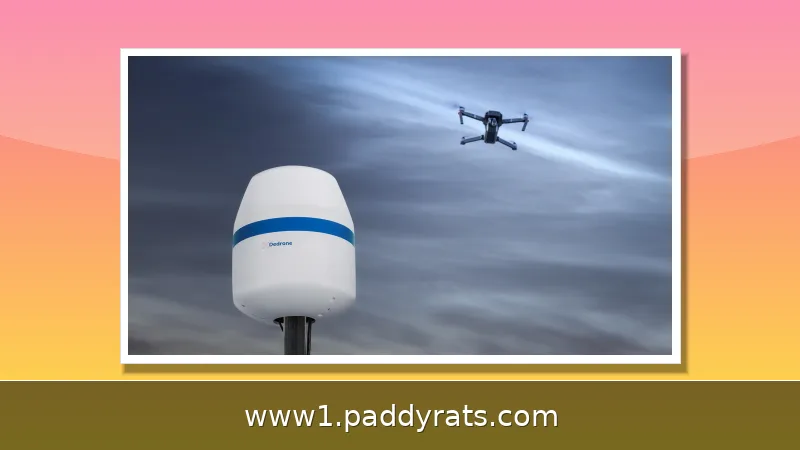
None of exist sensor can do all so serious usage cases will compose few together. RF analysers can passively listen for both control and video links, identifying the manufacturer/model and sometimes even GPS location of controller. Radar sends a radio signal, it measures the reflection that comes back and gets both direction and distance. Optical cameras and acoustic microphones, for visual and audible confirmation; Remote ID receivers to decode the broadcast from that drone. Sensor fusion takes all of it into one image and software like DedroneTracker. According to this, AI is sensor agnostic where it collects data from different sensors and process that to produce a response.
Every method has genuine strengths and real failure modes. The table below summarizes what I'd expect from each one in a residential or facility setting—drawn from published specs and vendor documentation rather than marketing claims.
| Method | Strengths | Limits | Typical cost |
|---|---|---|---|
| Visual / optical | Free, immediate confirmation, records evidence | Fails at night, in fog or rain, at altitude and distance; no make, model or operator ID | Free to a few hundred dollars |
| Acoustic | Cheap, works in line of sight, no license | Short range, defeated by wind and urban noise | Low hundreds of dollars |
| RF sensor | Passive, fast to deploy, penetrates urban environments, broadest brand coverage | Blind to autonomous or modified drones; false positives from other 2.4/5.8 GHz devices | $15,000 to $60,000 per unit |
| Radar | Day or night, all weather, no broadcast needed | Requires transmission license and frequency checks; range depends on drone size; birds can confuse it | Facility-grade pricing |
| Remote ID receiver | Decodes ID, position, altitude and speed | Only works on compliant drones that broadcast | Low cost |
The principle that makes or breaks most homeowners goes down to the gap in cost. RF sensors normally cost between $15,000 and $60,000 each for coverage or at least the equivalent of a facility-grade sensor network — another reason private individuals tend to start with eyes-on ears on cameras. Radar belongs to the same class of enterprise. Take Robin Radar's IRIS one of only two sensors on the market that are commercial grade full 3D, offering 360 azimuth and 60 elevation coverage, utilizing micro-Doppler to distinguish drones from birds (so as you can imagine this type of capability makes sense for a stadium or prison but seldom worth the price tag in your back yard).
Remote ID is worth mentioning separately, because it alters the economics of identification. An obedient drone sends out its name and real time location, so a low-cost receiver can provide you with what is in the air and approximately where the pilot happens to be positioned. However, the catch is that this broadcast in practice is voluntary – a legacy platform or an older aircraft can remain silent for ages and then you are back at RF and radar.
Acoustic and optical confirmation is still important, unfortunatelyablery they answer a different question. RF notifies you that a link exists; camera lets you know something is floating outside your window. Of course, in my experience knowing special reports the ones that stick with law enforcement are not the signal-strength graph but timestamped video.
How do RF sensors and radar detect drones step by step?
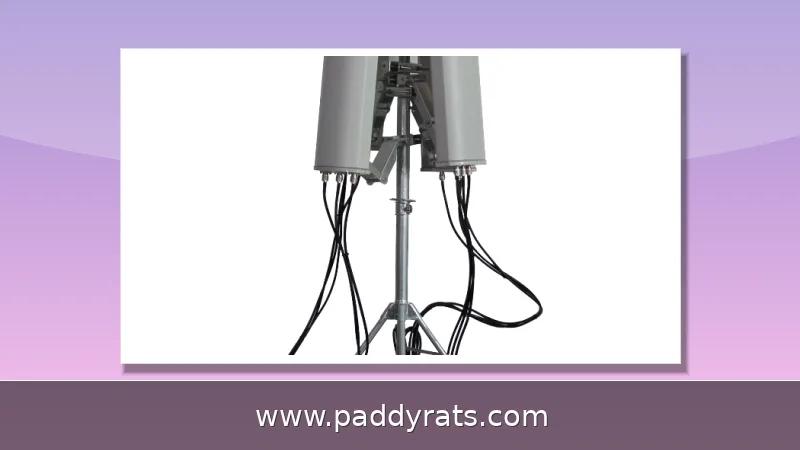
RF detection starts with listening rather than transmitting. A passive RF sensor scans the bands drones use for control and video, compares what it hears against a library of known waveforms, and flags matches. Because it never emits, it is fast to deploy, works through walls and foliage better than line-of-sight sensors, and covers the broadest range of commercial brands. When it identifies a link, it can often report the manufacturer, the model and sometimes the controller's GPS location.
Radar works the opposite way. It sends out a radio signal and calculates distance and direction based on the return. Once again, the common radars are built for big targets like aircraft but counter-UAS radar is designed to follow slow small objects flying low. Micro-Doppler radar takes it a step further by spotting speed differences inside an object in motion, such as distinguishing spinning rotors vs. the flapping of a bird — hence how Micro-doppler can separate out two = Noise per frame – Flaps and Spinner Radar is still the gold standard for autonomous drones because of that one ability.
The step-by-step flow in a fused system looks like this. First, a sensor detects an object or a signal. Second, the system classifies it as a drone rather than a bird, a plane or a Wi-Fi access point. Third, it identifies the model or broadcast ID where possible. Fourth, it locates and tracks the flight path. Fifth, it alerts a human. Every stage can fail independently, which is why vendors that claim single-sensor certainty are overstating the case.
Radar comes with regulatory friction that RF does not. It requires a transmission license and frequency checks to prevent interference with other systems, so a homeowner cannot simply buy a unit and switch it on. RF sensors avoid that problem entirely because they are passive receivers. That asymmetry explains why RF dominates residential and small-facility deployments while radar anchors airports, prisons and stadiums.
What are the legal limits of jamming and spoofing in the US?
This is the part most property owners get wrong. The FAA holds exclusive authority over national airspace, and flights below 400 feet that follow FAA rules over private property are generally lawful. Land rights do not extend into navigable airspace, so owning the ground does not give you control of the sky above it. A drone hovering over your yard may be annoying, but annoyance is not the legal test.
Drones are aircraft, and that classification carries criminal weight. Willfully damaging or disabling one is a federal offense under the Aircraft Sabotage Act, 18 U.S.C. 32, with a statutory maximum of up to 20 years. A Florida man who shot down a sheriff's office drone faced up to 10 years. Jamming, GPS spoofing, netting and lasing are all unlawful interference for private citizens, regardless of where the drone is flying.
The regulatory position is unusually clear for a change. A joint advisory from DOJ, FAA, DHS and FCC states that detection and tracking are broadly permissible while active interference is tightly restricted, and the FAA does not support mitigation without express authority from Congress. The FCC says jammers are illegal to use, advertise or sell to consumers, with monetary penalties, equipment seizure and imprisonment possible. An engineer and a colleague were arrested for illegally producing and selling anti-drone systems, which should end any thought that this is a gray market.
There is also a safety argument against jamming that gets less attention. Jammers can block emergency and law enforcement communications, and they do not locate the pilot or reveal the flight path. They also cannot tell you whether the drone was programmed to reach a target anyway. As a countermeasure, jamming is incomplete even where it is legal, and for private citizens it is not legal at all.
What should a homeowner do after detecting a suspicious drone?
Start with documentation, because it is the only thing you can do freely and the only thing that helps later. Record when, where and how often a drone enters your airspace, and keep the footage. Repeated appearances over days, prolonged hovering, positioning near windows or fenced areas, unusual hours, and direction changes when you move are the classic suspicious-surveillance signs. A log of those patterns is far more useful to authorities than a single complaint.
Then escalate in the right order. Ask the operator to stop, since pilots must keep visual line of sight and are therefore usually nearby. File an FAA complaint for rule violations such as flying above 400 feet or at night without authorization. Call local law enforcement if the behavior feels threatening. Support local and state rules that give police clearer tools, because federal authority is not going to be delegated to individual homeowners anytime soon.
A practical homeowner checklist looks like this: capture timestamped video, note the drone's altitude and direction, check whether a Remote ID app shows a broadcast, write down the time and duration of each sighting, and keep a simple incident log. If you operate a facility, add passive RF monitoring and a documented response procedure so staff do not improvise.
Budget matters too. Visual observation is free and needs no equipment, working in daylight within a few hundred meters. Acoustic monitoring and passive RF detectors are the next step up, while facility-grade RF sensors run from $15,000 to $60,000 per unit. Match the spend to the risk: a homeowner with one nuisance flight does not need a radar tower, and a prison with weekly incursions cannot rely on a pair of binoculars.
How do you choose a detection setup that matches your risk and budget?
I would frame the decision around three questions. What are you actually trying to learn: is a drone present, who is flying it, or where is the pilot? How often does the problem occur? And what will you do with the information once you have it? If the answer to the last question is call someone, then evidence quality matters more than detection range.
For a single-family home, a phone camera, a free Remote ID app and a written log cover most realistic scenarios at near-zero cost. For a small business or HOA, a passive RF sensor plus camera confirmation is the sensible middle tier. For critical infrastructure, stadiums and correctional facilities, fused RF and radar with a tracking interface is the only configuration that matches the threat, and the pricing reflects it.
Be honest about performance gaps. Lab-spec performance is not achievable in the real world. No single sensor suffices, and signal libraries alone are insufficient because drone signal distortions from environmental elements and obstacles such as buildings affect links. RF fails against autonomous drones with no active link and against modified drones on non-standard frequencies, and dense electromagnetic environments create false positives from other 2.4 and 5.8 GHz devices. Radar range depends on drone size, and many radars cannot reliably distinguish birds from drones.
The one rule that should never bend: detect, document and report, but do not interfere. Detection is the permissible first step and active mitigation is restricted to specific federal agencies. Any vendor promising you a legal jammer is selling you a federal case.
Frequently Asked Questions
How can I tell if a drone is interfering with signals on my property?
Passive RF sensors listen for drone control and video links and can flag unusual or interfering transmissions, while some GNSS interference detectors show interference on a small built-in screen and can trigger external alarms. Visual and acoustic checks help confirm a drone is actually nearby before you assume interference is coming from it.
Is it legal to jam a drone over my property in the US?
No. Under the Aircraft Sabotage Act, 18 U.S.C. 32, disabling an aircraft carries a statutory maximum of up to 20 years in prison, and the FCC says jammers and spoofers are illegal for private users to use, advertise or sell. Detection and documentation are broadly permissible, but active mitigation is reserved for specific federal agencies.
What is the cheapest way to detect drones near my home?
Visual observation is free and needs no equipment, working in daylight within a few hundred meters. Acoustic monitoring and passive RF detectors are the next step up, while facility-grade RF sensors typically range from $15,000 to $60,000 per unit. A free Remote ID app can also identify compliant drones and their broadcast position.
Can RF detection find autonomous drones?
Not reliably. RF sensors only detect drones actively communicating with a controller, and autonomous drones flying pre-programmed waypoints emit no control link. Radar does not depend on any broadcast signal, which makes it the method that catches autonomous, modified or dark drones when RF detection comes up empty.
What does drone signal interference on a property actually look like?
Drone signal interference rarely appears as a dramatic outage. It usually shows up as a recurring aircraft in the same airspace, a control or video link briefly crowding the 2.4 GHz or 5.8 GHz band, or a GNSS interference detector flagging anomalous noise. A drone passing overhead is not the same as a drone interfering with your signals.
Can a private citizen legally jam or shoot down a drone over their property?
No. Drones are classified as aircraft, so willfully damaging one is a federal offense under the Aircraft Sabotage Act with penalties up to 20 years. Jamming, GPS spoofing, netting and lasing are unlawful interference for private citizens. The FCC prohibits selling or using jammers, and the FAA does not support mitigation without express congressional authority.