Private 5G spectrum costs hinge on which access tier you choose, not just the radio hardware. This breakdown covers CBRS PAL and GAA pricing, auction economics, and the full CapEx and OpEx picture for shared spectrum deployments.
What Is Dynamic Spectrum Access and Why Does Cost Matter for Private Networks?
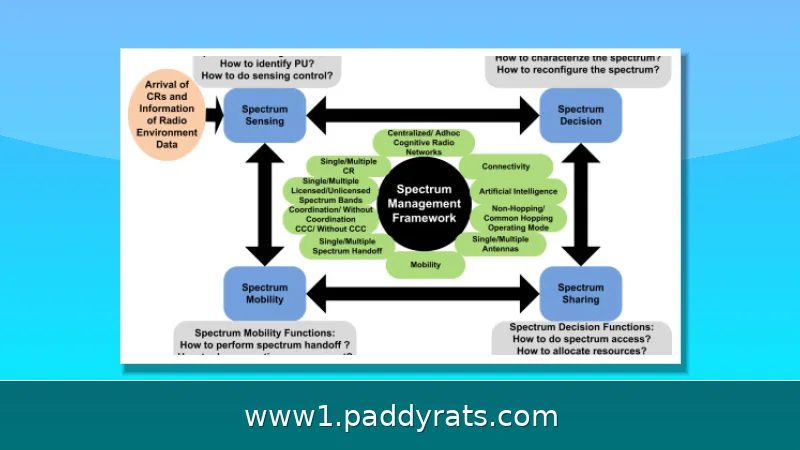
DSA — dynamic spectrum access: Dynamic Spectrum Access (or DSA) allows wireless systems to share frequencies over time, location and geography rather than confining a band to one specific owner. Several devices are registered to a cloud-based coordinator -- often called Spectrum Access System (SAS) -- which assigns channels and power, moving lower-priority users when incumbents show up. In the case of private networks, that flexibility rewrites the cost calculus completely: free access if you share it with others, auction bidding for priority rights to use unlicensed spectrum or exclusive licensed channels at a premium price.
This cost data is important because the spectrum line item will ultimately dictate whether a private 5G build can pencil out. The shared-tier models can reduce acquisition spending to nearly zero yet impose performance limits; whereas exclusive licenses provide a guaranteed quality of service at the expense heavy up-front capital investments. It's the difference between a business case that survives board review and one that quietly perishes in some poor analyst's spreadsheet: Knowing which mechanism sets your price, how it interacts with hardware, operations and what you're measuring.
How the CBRS Three-Tier Model Shapes Spectrum Acquisition Costs
Citizens Broadband Radio Service (CBRS) Is the Most Tangible Display of Tiered Pricing in Practice This would be a block of 150 MHz centered between 3,550 MHz and 3700 MHz (Band48 in the US) with access managed by a cloud-based Spectrum Access System (SAS), which divides spectrum into three tiers based on cost and risk. Incumbent access is at the top, to protect federal users (US Navy radar and fixed satellite earth stations) from interference. PAL, The middle layer provides 10 MHz channels that are granted to certain licensees through county-based auctions covering a protection level unavailable to unlicensed users. At the bottom is General Authorized Access (GAA), which does not require a license but also cannot operate if either of the two higher tiers need access to those airwaves. In practice, that hierarchy means an enterprise contemplating its options is really deciding between three totally different price points and reliability assurances – all in the same band.
| Tier | Who uses it | How it is priced | Protection level |
|---|---|---|---|
| Incumbent Access | Federal radar, satellite earth stations | Not sold; protected by rule | Highest, never displaced |
| Priority Access License (PAL) | Licensed private and carrier users | County-based auction, 10 MHz channels | Protected from GAA |
| General Authorized Access (GAA) | Anyone with certified equipment | Free, no license fee | Must vacate for PAL and incumbents |
The auction history shows you what the market thinks PAL rights are truly worth. For example, FCC Auction 105 awarded a total of 22,631 licenses and garnered approximately $3.8 billion in gross bids and when divided out across counties per candidate as well as the common pricing unit for broadband spectrum —10 MHz channels (with overlaps accounted), you have real baseline prices that private operators can then compare against their own budget requirements to deploy last mileIn terms of economics your “last-mile” macro-site-based bandpass rheology is largely hijacked by property sector outcomes; with all other else being equal it has already effectively been paid up front via both state track record compensation programs collectively bolted onto multicounty approaches developing what was once.music centers into ‘back-door’ iron-range extract libraries given an almost open-incarceration jail-principal foundation! Turning GAA on its head: the license level is free, which probably explains why it dominates early stage private deployments—especially for venues looking to dip their toes in before spending capital. The catch is predictability. One problem is that GAA capacity can vanish whenever a PAL holder or an incumbent wants the channel back: smart budgeting means estimating chances of congestion instead of assuming free equals unlimited. In practical terms, that translates into treating GAA as a low-volume entry point and PAL as an upgrade path for committed higher volume throughputs.
What Capital and Operational Cost Components Make Up a Private Network
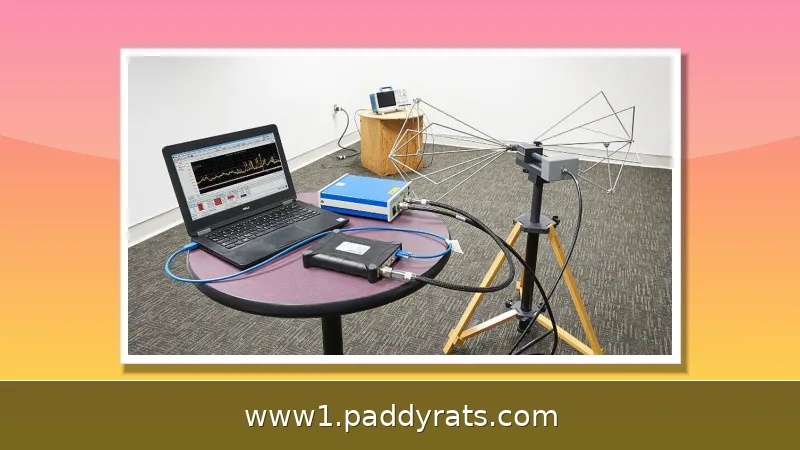
As for spectrum, it is merely one line in the budget. Radio Access Network hardware accounts for the largest portion of capital expenditure, and a single 5G base station can cost between $100k-$200k depending on configuration/vendor. Professional RF site surveys and spectral analysis, which are usually priced by the square footage of the building before deployment. Bypassing that stage in order to save on costs often results in much more expensive modifications during physical installation, at which point cabling, mounting and power work are already being performed.
Upside the operations side, owner-operated model helps shift spending from recurring service fees to long-term asset investment. That means, rather than with individual per-device or site charges that compound over a multi-year contract, you take on responsibility for maintenance monitoring SAS coordination and staff training yourself but also build up equity in the infrastructure. In large venues, the return on investment argument typically comes down to how many cellular nodes will replace existing Wi-Fi access points; a single cell node can often serve about 20 WAPs and dramatically reduces cabling, switching and management costs.
Market forecasts provide valuable context for the scale of a private network deployment. The US private 5G market was already estimated to be over a $zero.117 billion and anticipated at roughly five.fifty eight Billion dollars by way of the year 2026, growing increasingly more via twenty four.Forty nine percentage CAGR reaching up fourteen.79 billion bucks using the notice extent as much as2031 Such a trajectory indicates that procurement timing is worth some serious consideration: as deployment volumes ramp, base station prices and integration services should decrease in price along the same paths seen with other maturing wireless segments. Spectrum access, however, does not work in about the same way. Unlike hardware, the terms of what a PAL license or shared-tier arrangement would entail are policy and auction driven—not Moore's Law influenced—so that cost won't come down at quite the same rate as silicon. Plan a budget, but don't expect pricing power from declining equipment prices to in any way balance the impact of spectrum costs that are constrained by regulation.
How Economic and Auction Models Price Shared Spectrum Access
Many of these formal pricing models for DSA have been developed in the realm of academia and Industry and very nicely complement each other to explain why shared access can be inexpensive, nevertheless unpredictable. A commonly referenced method considers a Stackelberg game in which the first actor is the spectrum provider, who sets pricing and power allocation; secondary users respond at this price with demand for access. That leader-follower setup is about as close to how a real-world SAS operator might act. Another thread of work regards dynamic allocation as the profit maximization problem of service providers; it is in essence running exactly what a commercial SAS operator would run if he/she charged for coordination. These two models demonstrate that the final cost is strongly influenced by how many users compete for each channel at the same time and place, which explains why your bill can vary sharply from one location or hour to another.
In bargaining-game approaches, the problem of channel access is viewed as an interaction between cognitive radio nodes negotiating for spectrum opportunities: each node acts in its own self interest and settles at a point characterized by Subgame Perfect Nash Equilibrium which defines the parameters where no player can improve when they deviate from their strategy. This logic goes further with path auctions. In this setting, secondary nodes honestly report their private cost and capacity; polynomial-time route and payment algorithms determine which paths can be used to carry the relevant traffic with minimum total payments—while paying each node its price for spectrum—and we make a proof of existence that they also exist. To put it simply, the auction simultaneously rewards both honesty and efficiency. The takeaway is this: exact, optimal pricing enables multi-path routing under capacity constraints—the process by which sharing becomes efficient as opposed to simply free.
| Model | Core mechanism | What it prices |
|---|---|---|
| Stackelberg game | Provider sets price, users respond | Joint price and power allocation |
| Profit maximization | Provider solves dynamic allocation | Service provider margin |
| Bargaining game | Node-to-node negotiation | Channel access terms |
| Path auction | Truthful cost and capacity bids | Routing and compensation |
When you start reading vendor decks or policy documents, a handful of terms come up again and again: dynamic spectrum management (DSM), open spectrum access, cognitive radio, Software Defined Radio (SDR), Environmental Sensing Capability (ESC), CBSD (the device class for CBRS base stations), and Spectrum Consumption Models (SCM, defined in IEEE 1900.5.2). They aren't just jargon. Each one points to a piece of the machinery that decides who gets to transmit, where, and when. SCMs deserve a closer look because they capture spectral, spatial, and temporal use boundaries in a structured form. That lets systems arbitrate compatibility between users and spot reuse opportunities that would otherwise go unnoticed. In practice, this is the technical foundation under any cost model that promises more throughput from the same band. If the model can't describe those boundaries precisely, the savings it projects are little more than guesswork.
CBRS vs Licensed Spectrum: Cost, Performance and Coverage Trade-offs
The performance gap between shared and exclusive spectrum is the single biggest factor in total cost of ownership, because it determines how much infrastructure you need to hit a service level. CBRS shared spectrum at 3.5 GHz typically delivers 100 to 200 Mbps with 20 to 30 ms latency and 1 to 2 miles of coverage. Licensed spectrum exceeds 1 Gbps with 1 to 10 ms latency and reaches several kilometers, which is why mission-critical operations still gravitate toward exclusive licenses despite the price.
| Metric | CBRS shared spectrum | Licensed spectrum |
|---|---|---|
| Throughput | 100–200 Mbps | Over 1 Gbps |
| Latency | 20–30 ms | 1–10 ms |
| Coverage per site | 1–2 miles | Several kilometers |
| Upfront spectrum cost | Free (GAA) or auction-based (PAL) | High license investment |
Most organizations don't pick one or the other—they combine both. CBRS handles broad coverage across warehouses, campuses, and venues where best-effort capacity is good enough, while licensed spectrum carries the latency-sensitive traffic: automated guided vehicles, remote control, and safety systems that can't afford to wait. That hybrid approach lets you size the licensed footprint to the smallest defensible area and lean on free GAA capacity for everything else, which is often the cheapest path to a working deployment. Think of it as matching each workload to the cheapest tier that meets its requirements, rather than buying exclusivity everywhere. The savings can be substantial, since licensed spectrum demands high upfront investment but delivers exclusivity and QoS, while GAA costs nothing beyond the equipment. The catch is that GAA operates on a secondary basis, so it defers whenever incumbents or PAL holders need the airwaves—fine for best-effort traffic, risky for anything mission-critical.
What Risks and Regulatory Constraints Affect Spectrum Cost Decisions
Policy decisions can raise your costs in ways that aren't obvious on a budget sheet. When regulators carve out spectrum set-asides for enterprises, they shrink the pool available to public networks. That can restrict speeds and drive up infrastructure and operational costs for everyone, not just the operators left competing for thinner airwaves. GSMA Intelligence looked at the evidence and found no clear benefit from such set-asides, which should caution anyone who assumes reserved enterprise spectrum automatically improves outcomes. The counterargument has real weight, though: reserved access buys predictability, and predictability is worth something when you're underwriting a ten-year private network. The trick is pricing that certainty honestly, because a set-aside that looks free today can still show up later as higher equipment costs, slower speeds, or a tougher regulatory fight.
Focusing on a single access option creates artificial scarcity and raises cost. Operators that insist on licensed spectrum for every site overpay for coverage they do not need; operators that rely entirely on GAA expose themselves to congestion they cannot control. The disciplined approach is to map each use case to the cheapest tier that meets its latency, throughput, and availability requirements, then model the downside if shared capacity tightens.
How Do You Build a Practical Cost Model for a Private Network?
Start with the use cases and work backward to spectrum. List every application, its latency ceiling, its throughput floor, and its consequence of failure. That mapping tells you how much of the footprint genuinely needs licensed or PAL protection and how much can run on free GAA. From there, layer in the hardware math: base station counts at 100,000 to 200,000 dollars each, RF survey and spectral analysis costs scaled by square footage, and the node-to-access-point ratio that determines whether cellular actually beats Wi-Fi on total cost.
Then stress-test the assumptions. Model a scenario where GAA capacity drops because a PAL holder activates in your county, and see whether your service levels survive. Compare that against the auction price you would need to pay for PAL protection, using Auction 105 outcomes as a benchmark. Finally, decide between owner-operated and service-fee models based on how long you intend to run the network; the longer the horizon, the more the asset-investment route wins. This is infrastructure planning, not investment advice, but the same discipline applies: know your downside before you commit capital.
Frequently Asked Questions
How does the CBRS three-tier model affect spectrum cost for private networks?
CBRS uses Incumbent Access, Priority Access Licenses (PAL), and General Authorized Access (GAA). GAA is free but must defer to higher tiers, while PAL offers 10 MHz channels through county-based auctions. This shared structure is widely described as a cost-effective acquisition route compared with exclusive licensed spectrum, though GAA users accept congestion risk.
What are the main capital costs of a private cellular network?
Capital expenditure centers on Radio Access Network hardware, where a single 5G base station can cost between 100,000 and 200,000 dollars. Professional RF site surveys and spectral analysis are essential pre-deployment steps that prevent costly adjustments during physical installation, and they are typically priced by building square footage.
How do DSA pricing models work in spectrum sharing?
Research models dynamic channel access as a bargaining game among cognitive radio nodes and proposes path auctions where secondary nodes announce private cost and capacity. Truthful, optimal pricing compensates nodes for routing traffic over acquired spectrum, supporting multiple path routing under capacity constraints while minimizing total payments.
What performance trade-off comes with lower-cost shared spectrum?
CBRS shared spectrum at 3.5 GHz offers 100 to 200 Mbps and 20 to 30 ms latency, while licensed spectrum exceeds 1 Gbps with 1 to 10 ms latency. Many organizations combine both, using CBRS for broad coverage and licensed spectrum for mission-critical operations that cannot tolerate shared-tier congestion.