Building a field-ready signal team starts with training that matches the controllers, detection, and ATMS software actually deployed in your cabinets. This guide breaks down course content, certificate levels, costs, and hands-on practice paths from FHWA, universities, and vendors.
What core skills should signal control equipment operators learn?
buy in I've seen agencies run out and buy new controllers only to find that no one on staff could program them without having issues for months later. And that is the gap a quality training program fills. You train operators to have a functional working knowledge of signal system components, phasing (timing logic), arterial coordination and detection technology – loop video radar controller program cabinet architecture troubleshooting and the operation of ATMS or central signal software. The most effective courses teach these on real world examples of equipment from manufacturers and not abstract diagrams, so the skill transfer directly to what you will see in a cabinet in the field.
As FHWA breaks maintenance work into three functional types—hardware, software and system planning—and that packaging helps immensely when it comes time to design the training plan because each type requires different capabilities. Functional maintenance actually has to do with the timing plans themselves: are our cycles, splits and offsets producing good coordination along a corridor or not? The hardware maintenance that covers the physical layer—everything from cabinet wiring to conflict monitors and detection, where a loose connection or misaligned sensor can quietly sabotage everything upstream. Meanwhile, software maintenance addresses controller firmware and central system configuration — the layer that has grown most rapidly as agencies transition toward ATMS platforms. If we choose to ignore any of these areas, the impact is cumulative: accident rates increase, corridor performance wanes and equipment failures occur with greater frequency. That risk is not theoretical. Based on responses from 378 agencies, the 2005 National Traffic Signal Report Card graded agency maintenance practices at a dismal score of D+:68 (that is still an indication of how easily maintenance takes back-seat to capital improvements).
| Maintenance category | Core competencies | Typical training focus |
|---|---|---|
| Functional | Timing plans, coordination performance | Signal timing and coordination concepts |
| Hardware | Cabinet wiring, conflict monitors, detection | Field troubleshooting and repair |
| Software | Controller firmware, central system configuration | Controller programming and ATMS workflows |
How are training courses matched to deployed controllers and detection?
Before you ever book a single course, get an honest read of what your staff know and do not understand as well as what is actually running through your system! That order is far more important than most agencies anticipate. Traffic Control Corporation– established in 1946 as an Automatic Signal exclusive distributor out of Chicago, now headquartered in Woodridge Illinois and providing coverage into eleven states – describes a process which begins with just this type of needs assessment. From there, courses are aligned with the equipment in which it was deployed and followed by practical technical practice that would advance into programming at a keystroke-level and monitoring workflows before focusing on building sustained capability. Consider it a ladder, not a menu: if you skip rungs gaps appear; and why buy training for hardware your organisation doesn't own when budget is wasted on skills that no-one will use? This keeps content tightly bound to the controllers and detection your technicians are actually touching, which is also why it is worth taking time for a front-end assessment in something vendor-led like this.
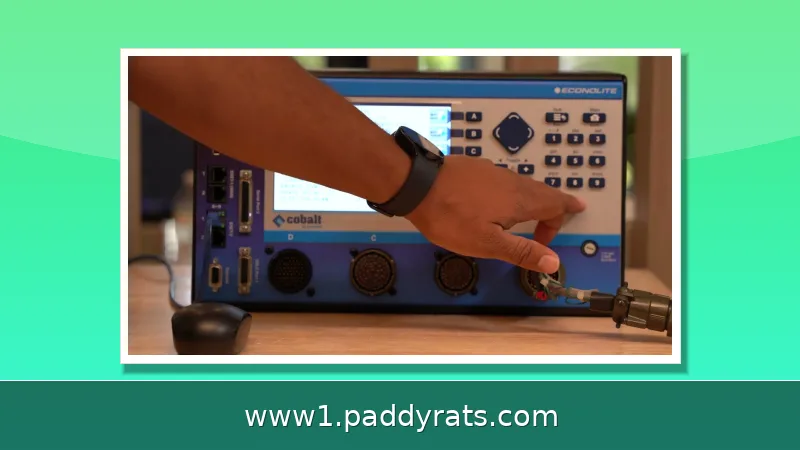
Matching is tangible: If your cabinets operate Econolite ASC/3 or Cobalt controllers, training should work through those interfaces. You may be using Autoscope, Accuscan or even an Accusense detector which means your detection module should also use those products. For ATMS, if Centracs is your software you are likely to have a session running at the server that matches what is on your dashboard. Procurement language can enforce this. One such method for assuring knowledge transfer at the instant of installation is hiring vendors to provide on-site training in system maintenance and operation as part of state contracts, a tactic promoted by NCHRP Report 812The Signal Timing Manual.
What certificate levels exist for traffic signal technicians?
A certificate really stands out because of its structure, and the Connecticut Traffic Signal Technician Certificate Program offered by UConn T2 Center is probably the best example I've found. This consists of three levels, where each level contains four workshops with Level Three being two electives in addition to that core. That design is critical because it provides technicians with a visible career ladder rather than just an ad hoc series of one-off classes. From the ground up, a new hire starts at Level One focusing on fundamentals and works towards higher levels of specialty troubleshooting and networking before moving into coordination with central systems. The lure for supervisors is that progress becomes easily tracked and budgeted: you know what's next, AND you can tie a technician's development to the completion of a constraints-driven list of workshops vs. shooting in the dark.
| Level | Focus | Structure |
|---|---|---|
| Level One | Maintenance and operation fundamentals | Four workshops |
| Level Two | Advanced maintenance, troubleshooting, detection | Four workshops |
| Level Three | Networking, advanced programming, advanced troubleshooting, signal coordination | Four workshops plus two electives |
Costs are refreshingly straightforward in Connecticut's program: workshops cost $100 for municipal and state government employees, and $200 for private entities regardless whether the participant works at a big city public works department or trades as a small contractor. Which is just about the wildest price that one might find next to some national courses, and explains why smaller municipalities rely on regional centres rather than flying staff out for weekend training somewhere far away. Other programming, like National Highway Institute courses and those offered through university-sponsored academies, have fees and schedules where they can be a little more difficult to budget for in one line item. For face-to-face meetings, weigh the cost of a registration per seat against travel expenses and lodging (and don't forget to add in the true opportunity costs for time your staff are away from doing their real work; those hidden costs can far exceed what you'll pay in fees).
Which agencies and universities offer recognized signal training?
Federally funded as well as state-led and vendor-provided training serve different needs for the control equipment operator workforce (Editor's note: This sentence was revised after initial publication to clarify that federal, university, State DOTand vendor programs combined build a team-oriented group of people..), The FHWA Arterial Management Program and the National Highway Institute publish a catalog of individual instructor-led courses and web-based courses, including stated course durations. This makes these offerings convenient to schedule around field shifts, and very justifiable in a training budget. University programs serve another purpose: they institutionalize the certificate and regional access that can help agencies who want an established credential path instead of ad-hoc classes. The bulk of the remaining gaps are filled by State DOTs, as well as local technical assistance programs who can relive training issues that only touch smaller groups such a contractors or agencies without either the capacity in staff to send everyone through an expensive national scope course with travel budgets limited.
| Course | Format | Length |
|---|---|---|
| 133121 Traffic Signal Design and Operation | Instructor-led | 2 days |
| 133122 Traffic Signal Timing Concepts | Instructor-led | 2 days |
| 133129 Introduction to ATSPM | Web-based | 3 hours |
| 133130 Advanced ATSPM | Virtual, instructor-led | 8 hours |
| 133134 Introduction to Systems Engineering for Signal Systems | Web-based | 1 hour |
| 133135 Practical Application of Systems Engineering | Instructor-led | 2 days |
Outside of the FHWA, we see programs like Traffic Signal Academy at University of Tennesee Center for Transportation Research and MOST program by U. The state-level option includes MnDOT, PennDOT, TxLTAP at UT Arlington and NCTCOG's program equipment upgrade for local agencies; while UDOT gives an online course in traffic signal and ATMS developed on 10 modules. The FHWA training page that was current to March 28, 2025: … so look at the listings before you seal a schedule.
How does hands-on controller and ATMS practice build field readiness?
Classroom instruction builds concepts, but hands-on and simulator practice build the confidence that shows up at 2 a.m. when a conflict monitor trips. I've found that technicians who have already stepped through keystroke-level programming on a bench cabinet move far faster in the field, and they make fewer configuration errors during timing updates. Simulator sessions let trainees break things safely, which is exactly the point.
A practical progression works well: complete fundamentals such as a Signals 101 module, move into controller programming and detection, then advance to troubleshooting, coordination, and central systems. ATMS training deserves its own block because central software operation is where many agencies are thinnest. Screenshots of live dashboards, alarm logs, and ATSPM reports make abstract data concepts tangible, and pairing them with real cabinet photos keeps the connection to hardware visible throughout the course.
What safety and work zone training complements signal operations?
Signal work happens next to live traffic, so safety training isn't optional. OSHA provided a record 1,392,611 workers with safety and health training in fiscal year 2019, and its On-Site Consultation Program identified 137,885 workplace hazards while protecting 3.2 million workers, according to the agency's 2019 fiscal year report. For signal crews, that means combining equipment training with work zone safety and flagger training so technicians understand both the electronics and the exposure.
Regulatory context matters too, and it's easy to overlook when you're focused on controllers and cabinets. 49 CFR Part 236 spells out instruction requirements for roadway workers who deal with processor-based signal and train control equipment. That's a railroad-adjacent rule, so it doesn't apply directly to most municipal signal shops, but it's a useful reminder that formal training records carry real compliance weight. The bigger risk agencies face is quieter: after a technology upgrade, maintenance staffing and skill needs often get underestimated. Staffing guidelines dated November 6, 2020, and a maintenance article from March 17, 2021, both flag that gap. The practical fix is simple—budget for training alongside the hardware purchase, not months after the new equipment is already in the field.
Who should attend traffic signal operator training?
Training programs are built for a fairly wide audience: current and new traffic signal technicians, municipal and state agency staff who oversee local signals, contractors, consultants, and maintenance personnel. That mix matters because the same course might serve a seasoned technician refreshing skills and a newcomer learning the basics. Some certificate tracks are explicitly designed for people who aspire to move into a signal technician position down the road, which makes them a practical tool for workforce pipeline building—shop staff, helpers, and junior public works employees can start on a defined path rather than picking up knowledge piecemeal. For public works departments facing retirements, this is worth treating as succession planning, not just skills upgrading. When experienced technicians walk out the door, institutional knowledge about controller programming, detection, and coordination goes with them unless someone else has been trained to step in.
Vendor-led training, such as TCC's Econolite-based courses, ties content directly to deployed equipment, while agency and university programs offer broader standards coverage and certificate structures. The trade-off is depth versus breadth. In my experience, the strongest teams mix both: national courses for standards and systems thinking, vendor sessions for the exact controllers and detection in their cabinets, and regional workshops for cost-effective refreshers.
How should an agency sequence its signal training investment?
A workable sequence starts with a clear-eyed needs assessment: what controllers, detection, and central software does the agency actually run, and what skill gaps exist on the team? From there, staff pick introductory or advanced courses to match their level, then build fundamentals before moving into controller programming and detection work. Troubleshooting, signal timing and coordination, and central system operations come next, layer by layer. Weaving safety and work zone modules through every stage keeps compliance current rather than crammed into a single session. Vendors like TCC often start with this same kind of staff and system review, matching courses to the equipment actually deployed and then moving into keystroke-level programming and monitoring workflows. The goal is a repeatable internal capability rather than a one-time event, because controller firmware, ATMS platforms, and detection technology keep changing.
Documenting who has completed which level helps with procurement, staffing decisions, and audit trails. It also makes the case for budget when a corridor upgrade lands. If you're building a program this year, start by inventorying your deployed controllers, detection, and ATMS software, then map each to a course that teaches it directly. That mapping is the difference between training that sticks and training that fills a certificate frame on the wall.
Frequently Asked Questions
What topics does a traffic signal training program cover?
Courses typically cover signal system components, phasing and timing, coordination across arterials, detection technologies such as loop, video, and radar, controller programming, cabinet architecture, troubleshooting, and ATMS or central signal software operation. Many programs use real equipment examples from manufacturers so technicians practice on the same hardware and interfaces they will encounter in the field.
Who should attend traffic signal operator training?
Programs target current and new traffic signal technicians, municipal and state agency staff responsible for local signals, contractors, consultants, and maintenance personnel. Some certificate tracks are designed for people who aspire to assume a signal technician position in the future, making them useful for agencies building a workforce pipeline ahead of retirements.
Are there certificate levels for traffic signal technicians?
Yes. The Connecticut Traffic Signal Technician Certificate Program has three levels. Level One covers maintenance and operation fundamentals, Level Two covers advanced maintenance, troubleshooting, and detection, and Level Three covers networking, advanced programming, advanced troubleshooting, and signal coordination, plus two electives. Each level is built from four workshops.
How much does traffic signal technician training cost?
In the Connecticut program, each workshop costs $100 for municipal and state government employees and $200 for private entities. Other programs, such as National Highway Institute courses and university-sponsored academies, set their own fees and schedules, so compare per-seat cost against travel and staff time when planning a budget.