Jamming drowns satellite signals in noise, while GNSS spoofing feeds a receiver believable fake coordinates. For property owners, the bigger story is that neither is legal to operate yourself in the US, and spoofing is far harder to detect and defend against.
Drone Jammer vs GNSS Spoofing: What's the Real Difference?
At its core, the difference comes down to how each attack messes with a drone's satellite positioning. A jammer simply blasts high-power RF noise across GNSS frequencies like L1, L2, and L5, drowning out the weak satellite signals the receiver relies on. The drone loses its fix, or its accuracy takes a sharp nosedive. Spoofing pulls the opposite trick: it generates counterfeit GNSS signals with manipulated timing and navigation data, so the receiver calculates a false position or time while thinking nothing is wrong. In other words, one attack blinds the drone, and the other lies to it.
The simplest way to keep these two straight is to imagine one person shouting over another versus someone quietly impersonating them. Jamming is the shouting. It blasts high-power RF noise across GNSS frequencies such as L1, L2, and L5, and the receiver can't help but notice—signal strength falls off a cliff, the noise floor climbs, and the fix either degrades or vanishes entirely. Spoofing is the impersonation. A well-built spoofer generates counterfeit signals with manipulated timing and navigation data, syncs up with the genuine constellation, then slowly raises power and nudges the receiver toward a false position. The target stays locked the whole time, usually with no clue anything is wrong. That asymmetry is precisely why security teams see spoofing as the harder problem. Jamming is conspicuous, and its failure modes tend to show. Spoofing is subtle by design, can hide inside a signal that looks perfectly healthy, and may never trip a fail-safe. And yet jamming still gets most of the public attention, mainly because the hardware is cheap and everywhere—commercial units sell online for as little as $20, and even a 10 mW chirp jammer can take out GPS within several miles.
How Do Jamming and Spoofing Attacks Actually Work?
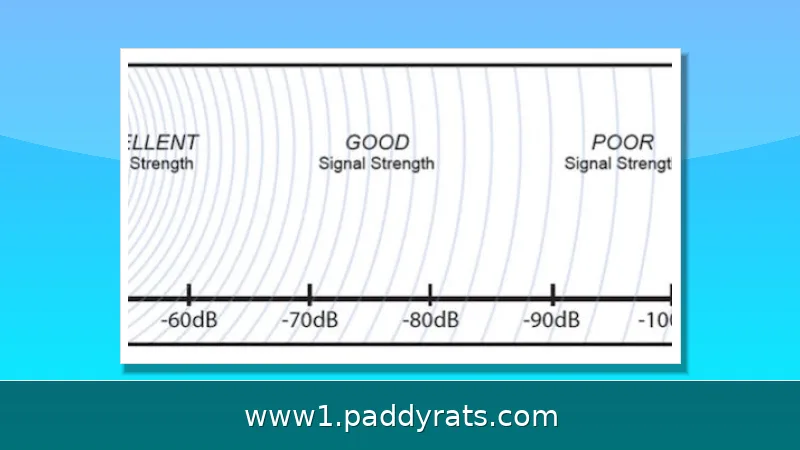
Jamming hardware is pretty crude, but it works. Most units just flood the airwaves with white noise or swept tones, raising the noise floor until the satellite signal gets buried underneath. On the receiving end, you'll usually see a sudden drop in signal strength, or a receiver that just can't compute a fix anymore. Physics heavily favors the attacker here: GNSS signals reach the ground at incredibly low power levels, so even a modest transmitter can overwhelm them across a surprisingly wide area. That's exactly why a tiny 10 mW chirp jammer can reportedly knock out GPS reception several miles away—it isn't outmuscling the satellite, it's just shouting over a whisper. For anyone defending a property, the takeaway is uncomfortable: jamming takes almost no sophistication, yet its effects can reach well beyond the intended target.
Spoofing is the subtler play, and it usually comes in one of two forms. With a carry-off attack, the spoofer latches onto the real satellite signals first, then gradually ramps up its own power while ever so slightly shifting the timing and navigation data. The receiver drifts toward a false position without ever losing its fix, so the screen gives nothing away. Meaconing is the cruder version: it just grabs the signals and re-transmits them rather than rewriting anything, which is exactly why GPS repeaters turn up so often as the delivery method. Both approaches succeed for the same basic reason. Civilian GNSS signals come in unauthenticated, so a receiver has no native way to tell whether the satellites it's hearing are genuine or just a very convincing copy.
What Do These Attacks Do to Drones and the Property Below?
The effects on a drone differ sharply between the two attacks, and that difference matters most to whoever owns the property underneath. Jamming is blunt: it drowns the satellite signal in noise, so the flight controller loses the position data it needs. The usual responses are a hover, some drift, an automatic return-to-home trigger, a failed mission, or, in the worst case, a crash. Those outcomes are disruptive, sure, but they tend to be visible—the operator sees a warning, the drone starts acting weird, and the flight ends somewhere predictable. Spoofing works the other way around. The receiver gets fed counterfeit signals with manipulated timing and navigation data, so it calculates a false position without ever realizing it's under attack. The drone can be nudged gradually off its route, forced down into a controlled landing area, or taken over completely by the attacker, and it may never trip the fail-safes that a jamming-induced signal loss would set off. A hijacked drone can look perfectly fine to its operator while it's actually flying somewhere else.
| Attack | How the drone reacts | What the operator notices |
|---|---|---|
| Jamming | Hover, drift, return-to-home, mission failure, crash risk | Obvious symptoms; fail-safes usually trip |
| Spoofing | Gradual route deviation, controlled landing, full navigation takeover | May look normal; fail-safes may never trigger |
From a property owner's point of view, the practical risk runs in both directions, and neither option is as tidy as it sounds. Jamming a drone near your house doesn't conveniently stop at your fence line—RF noise has no respect for property boundaries. The same high-power signal that drowns out a drone's GPS can also take down emergency calls, police and fire communications, home Wi-Fi, Bluetooth devices, cell service, and even aviation navigation passing overhead, which is how a local defense turns into a neighborhood-wide headache. Spoofing, on the other hand, is quieter and much harder to trace back to a source, but actually pulling it off requires equipment and expertise that most individuals simply don't have. And either way, jamming by itself is an incomplete countermeasure: it won't locate the pilot or identify the drone, so you're still left guessing what the aircraft was doing and what it was carrying.
Is It Legal to Jam or Spoof a Drone Over My Property?
For private property owners in the United States, the short answer is no. Under the Communications Act of 1934 — specifically 47 U.S.C. 301, 302a, and 333 — the FCC has the authority to prohibit operating, marketing, or selling any device that blocks or jams authorized radio communications. Penalties can run as high as $112,500 per incident, and criminal prosecution is on the table too. The key point is that private companies, individual property owners, and private security firms that aren't contracted by an authorized agency simply are not authorized to jam or spoof, no matter what happens to be flying over their land.
Only a handful of parties actually have the legal authority to jam or spoof. The Department of Defense and military installations fall under Title 10, with that authority expanded by JIATF-401 guidance issued in January 2026. DHS—including CBP and the Secret Service—holds authority too, as do DOJ (including the FBI), DOE for nuclear facilities, and the Coast Guard. Then there's the SAFER SKIES Act in the FY2026 NDAA, which newly extends authorization to state and local law enforcement once they've completed training at the FBI National Counter-UAS Training Center in Huntsville, Alabama. The same act covers correctional facility security agencies that meet federal certification, plus agencies protecting NSSEs and SEAR-rated events like the FIFA World Cup 2026.
That grant money comes with strings attached, though, and they matter if you were hoping to fund a defense setup this way. FEMA's C-UAS Grant Program explicitly prohibits buying weapons with grant funds, and mitigation equipment—the gear that actually interferes with a drone—is only available to certified law enforcement personnel. In other words, the funding stream is built to equip the professionals, not private homeowners. For everyone else, the responsible path is detection and reporting rather than transmission. That means keeping a simple log of what you saw: the date and time, the location, the drone's behavior, and any photos or video you can safely capture from the ground. Then contact local law enforcement and hand that record over. Do that, and you stay squarely on the right side of the rules—no FCC violations, no interference with emergency or aviation frequencies—while still creating a paper trail that authorities can actually act on.
How Common Are GNSS Interference Incidents, and What Do They Cost?
The incident record is longer than most people expect. In 2017, more than 20 vessels near Novorossiysk in the Black Sea reported GPS spoofing. In 2022, GNSS interference near Dallas-Fort Worth Airport disrupted aircraft navigation. C4ADS reported that Russia interfered with more than 1,300 civilian vessels across almost 10,000 attempts, ICAO logged 65 spoofing incidents across the Middle East in the two years before 2019, and Eurocontrol received more than 800 GNSS interference reports in Europe in the first half of 2018. These are not isolated lab demonstrations.
The trend lines from the past two years are just as sobering. Trimble reports a 500% jump in spoofing incidents in 2024 compared with 2023, and the daily toll tells the story: roughly 300 flights were running into spoofing in January 2024, a figure that climbed to around 1,500 by August of the same year. Jamming has left its own mark, too. Between August 2023 and March 2024, some 46,000 aircraft in the Baltic Sea region showed signs of jamming — a reminder that interference isn't confined to conflict zones or the open ocean. For property owners weighing jammer versus spoofing defenses, the takeaway is that both threats are growing more frequent, not fading. The table below pulls the timeline together and names the sources behind each figure.
| Time period | Reported incident or figure | Source |
|---|---|---|
| 2024 vs. 2023 | 500% increase in spoofing incidents | Trimble |
| January 2024 | About 300 flights per day experiencing spoofing | Trimble |
| Through August 2024 | About 1,500 flights per day experiencing spoofing | Trimble |
| August 2023 – March 2024 | Some 46,000 aircraft in the Baltic Sea region showing jamming signs | Trimble |
| Period | Incident or Finding | Source |
|---|---|---|
| 2017 | Over 20 vessels report GPS spoofing near Novorossiysk, Black Sea | Vessel reports cited in industry coverage |
| Before 2019 (2 years) | 65 spoofing incidents across the Middle East | ICAO |
| First half of 2018 | More than 800 GNSS interference reports in Europe | Eurocontrol |
| 2022 | GNSS interference near Dallas-Fort Worth Airport disrupts aircraft navigation | Aviation reporting |
| Aug 2023 - Mar 2024 | About 46,000 aircraft in the Baltic Sea region show jamming signs | Trimble |
| 2024 vs. 2023 | 500% increase in spoofing incidents; daily affected flights rise from about 300 to about 1,500 | Trimble |
Cost and accessibility make the problem worse. Commercial jammers marketed as privacy tools sell online for as little as $20, according to Sony, and Trimble notes devices disguised as USB sticks or car chargers for as little as $5. Low-cost software-defined radios put spoofing tools within reach of hobbyists. Cheap hardware plus weak civilian signal authentication is a bad combination for anyone relying on GNSS for navigation, timing, or drone operations.
What Technologies Defend Against Jamming and Spoofing?
Defense starts at the receiver, because that is where an attack either succeeds or falls apart. A multi-constellation receiver tracking GPS, Galileo, GLONASS, and BeiDou has far more signals to cross-check than a GPS-only unit, and adding multi-frequency coverage across L1, L2, and L5 means a single corrupted band won't necessarily drag the whole fix off course—the receiver can compare readings and flag the odd one out. Signal authentication goes a step further by adding a cryptographic layer: Galileo OS-NMA and GPS Chimera let a receiver verify that a signal actually came from the satellite it claims to be, which is something raw signal strength alone can never confirm. On the detection side, spectrum monitoring, RSSI tracking, time-difference measurements, and angle-of-arrival analysis can flag anomalies before navigation noticeably degrades—catching the problem in the warning stage rather than after a drone has already drifted. Together, these layers won't make a receiver unstoppable, but they raise the cost of a successful attack and buy defenders time to react.
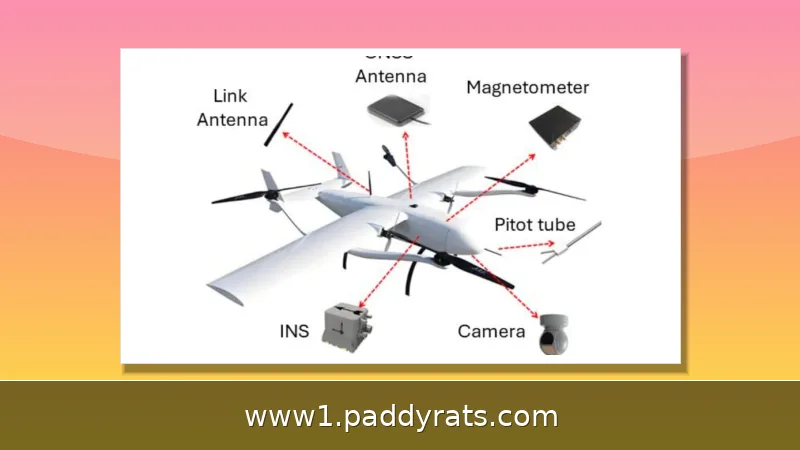
Anti-jamming hardware handles the louder threat. Controlled Reception Pattern Antennas use beamforming to steer nulls toward a jammer, supported by DSP filters, adaptive nulling, and inertial navigation integration. Sensor fusion with INS, barometers, visual navigation, 5G, LiDAR, and SLAM keeps a drone flying when GNSS becomes unreliable. Geofencing adds a policy layer that constrains where a drone can go even if its position estimate is manipulated. For property and site protection, the realistic posture is monitoring and layered detection rather than active transmission.
When comparing anti-jamming modules, a few metrics matter most. The table below lists the specifications buyers and integrators typically evaluate.
| Metric | What to Look For |
|---|---|
| J/S ratio | Top systems survive +40 dB or more |
| Null count | Typically 1-3 for compact CRPAs |
| Frequency bands | Coverage across L1, L2, and L5 plus relevant drone bands |
| SWaP | Often under 200 g and 3 W for small UAV modules |
| Interfaces | UART, CAN, Ethernet |
| Export status | Some high-end devices fall under ITAR/EAR restrictions |
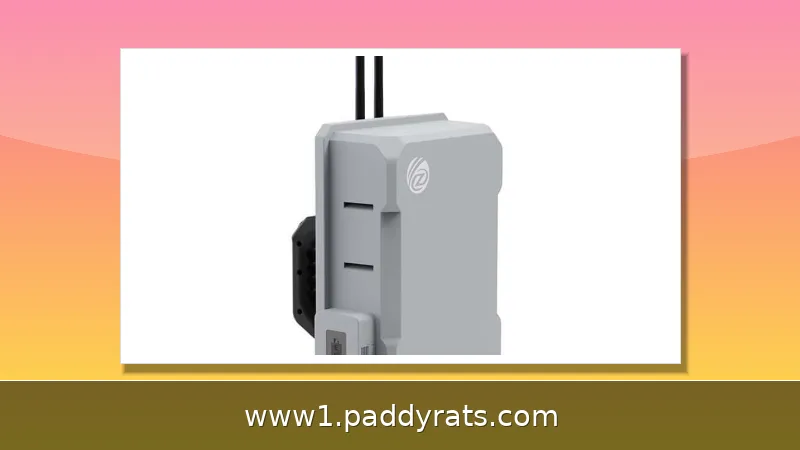
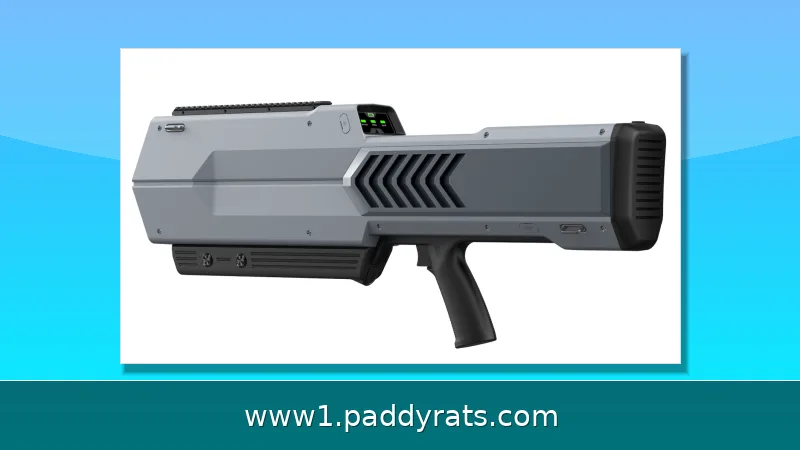
Modern jammer hardware, for context, targets 433 MHz and 900 MHz, 1.2 GHz and 1.5 GHz, 2.4 GHz and 5.8 GHz, and the GNSS bands. Smart jamming uses directional antennas and selective frequency targeting, and one example offers 360-degree coverage out to 1.9 miles with manual and automatic activation, mounted on fixed positions, tripods, or vehicles. Knowing what the threat looks like helps you choose receivers and monitoring tools that can recognize it, even if you never transmit a signal yourself.
Why Is Spoofing Harder to Stop Than Jamming?
Spoofing detection is genuinely difficult, especially against a high-quality spoofer that matches signal strength and timing closely. A jamming attack announces itself through signal loss and a rising noise floor; a spoofing attack can look like a perfectly healthy satellite fix right up until the drone is somewhere it should not be. Mitigation requires advanced signal processing, multi-system redundancy, and authentication, which is why layered defenses matter more than any single product. There is no cheap receiver-side fix that reliably catches a skilled spoofer.
The practical lesson for property owners is that the defensive stack should be about awareness. Real-time spectrum monitoring, consistency checks across constellations, and logging of interference events give you evidence and early warning. If you operate drones yourself, pair GNSS with inertial and visual navigation so a spoofed position cannot silently take over the flight. If you are protecting a site, work with certified providers and law enforcement rather than buying a jammer, because the legal exposure is real and the technical payoff is limited.
How Should Property Owners Approach Drone Defense Responsibly?
Start with detection and documentation, not transmission. A spectrum-monitoring setup or a service that logs GNSS interference gives you a record of what happened, when, and on which frequencies, which is exactly what law enforcement and regulators need. Keep the logs, note the drone's behavior, and report repeat incidents. If you operate drones on the property, invest in multi-constellation, multi-frequency receivers with authentication support and sensor fusion so your own aircraft are resilient.
Then work within the authorization framework. Only specified government entities and, under the SAFER SKIES Act, trained state and local law enforcement can lawfully mitigate drone threats in the US. Private jamming or spoofing exposes you to fines up to $112,500 per incident and possible criminal prosecution, and it can knock out emergency and aviation communications nearby. Responsible defense means monitoring, reporting, hardening your own systems, and letting authorized agencies handle mitigation.
Frequently Asked Questions
What is the difference between drone jamming and GNSS spoofing?
Jamming floods GNSS frequencies with high-power noise so a receiver loses satellite lock and positioning. Spoofing instead broadcasts counterfeit GNSS signals that mimic real satellites, tricking the receiver into computing a false position or time without obvious signal loss, which makes it much harder to detect.
Can a private property owner legally use a drone jammer for defense?
In the United States, the FCC prohibits operating, marketing, or selling RF jamming equipment under the Communications Act of 1934, with fines up to $112,500 per incident and possible criminal prosecution. Individual property owners and private companies are not authorized; only specified government entities and, under the SAFER SKIES Act, trained state and local law enforcement are.
Why is spoofing considered more dangerous than jamming for drones?
Jamming causes an obvious loss of signal that often triggers fail-safe return-to-home or landing. Spoofing feeds believable false data, so a drone may gradually deviate, land in a hostile area, or be taken over without triggering fail-safes, and it is difficult to detect without signal authentication or consistency checks.
What technologies protect drones against jamming and spoofing?
Layered defenses include multi-constellation, multi-frequency GNSS receivers, signal authentication such as Galileo OS-NMA, Controlled Reception Pattern Antennas that steer nulls toward jammers, sensor fusion with inertial navigation, and real-time spectrum or signal-strength monitoring to detect anomalies before navigation degrades.
What is the difference between a drone jammer and GNSS spoofing?
A jammer broadcasts high-power RF noise across GNSS frequencies, drowning out weak satellite signals so a drone loses its position fix. Spoofing instead transmits counterfeit GNSS signals with manipulated timing and navigation data, so the receiver computes a false position while believing everything is normal. Jamming blinds the drone; spoofing lies to it.
Is it legal for a private property owner to jam or spoof a drone in the US?
No. The Communications Act of 1934, including 47 U.S.C. 301, 302a, and 333, prohibits private individuals and companies from operating, marketing, or selling devices that jam authorized radio communications. Penalties can reach $112,500 per incident with possible criminal prosecution. Only narrow authorized government agencies and, under the SAFER SKIES Act, trained state and local law enforcement may lawfully mitigate drone threats.