Drone signal jamming can force unauthorized drones away from stadiums, festivals, and drone shows, but in the US it remains a tightly restricted federal tool. Here is how the technology works, what ranges and frequencies are involved, and who is actually allowed to pull the trigger.
What Is Drone Signal Jamming and Why Does It Matter for Events?
A drone jammer is a type of radio frequency transmitter that interrupts the communication link between a UAV and pilot, forcing it into its fail-safe mode (return to launch, hover or descend). That capability is at the forefront of counter-UAS planning for event security teams, because one rogue drone flying above a sold-out stadium or outdoor festival can stop traffic in its tracks, compromise crowds and result in costly interruptions. The advantages are clear: jamming is non-kinetic, able to neutralise without destroying the drone as its operator has pressed a button only seconds earlier. The catch is the same radio energy that also cuts a drone link can hit aircraft, emergency communications and wireless infrastructure and it is why above all else these legal questions are as crucial as technical ones.
How Do Drone Jammers Work: Frequencies, Techniques, and Drone Responses
Jamming works by broadcasting a stronger signal on the same frequencies a drone uses, drowning out the legitimate command-and-control link. Modern jammers target multiple bands at once: 433 MHz and 900 MHz for commercial and DIY control systems, 1.2 GHz and 1.5 GHz for video and telemetry, 2.4 GHz and 5.8 GHz for the primary command-and-control links used by DJI and most commercial drones, and GNSS bands including GPS, GLONASS, Galileo, and BeiDou to disrupt navigation. Some systems ship with default bands of 900 MHz, 1.5 GHz, 2.4 GHz, 5.2 GHz, and 5.8 GHz, with customization available, while four-channel FPV-focused units can disrupt 700, 800, 1,100, and 1,300 MHz when vehicle-mounted with active cooling.
The band list matters but so does the technique. Spot jamming hits a single frequency, sweep jamming rotates through each fcequency one at a time and barrage jammer will hit all frequencies but with low energy per bump and has best practical breadth of effect against most drones. Jamming is different than spoofing: Jamming prevents signals while spoofers send false position or time signal to misdirect the drone. Real jammed drone response is truly random; it might fly home, stay in place or fall out of the sky wherever it happened to be. Jamming neither knows where the pilot is nor what payload they are carrying—hence, detection and identification almost always serve as first steps in any responsible counter-UAS workflow.
What Are the Legal Restrictions on Drone Jamming for Event Security?
The U.S. legal picture is more stringent then what many event organisers expect The FCC bans the operation, marketing and sale of jamming devices under Title III of the Communications Act of 1934 (47 U.S.C. §301, §302a, and §333). Violation carries a maximum civil penalty not to exceed $112549 per violation — plus possible criminal prosecution. Another key point is that private companies, individual property owners and private security firms typically cannot jam drones using their own equipment over their own venue unless they themselves are operating under direct federal authority or a contract with an authorized agency. That is basically one single rule and how venues (should) plan accordingly: The question for every venue almost never is, if jamming would work; it always should be, who on site now can answer this legally?
Federal power is on the rise — slowly. The recently released SAFER SKIES Act, now incorporated into the FY2026 NDAA, separately enables state and local law enforcement after completion of training at the FBI's National Counter-UAS Training Center in Huntsville, Alabama; correctional facility security agencies; as well as entities responsible for securing national special security events (NSSEs) or SEAR-rated events such as FIFA World Cup 2026. The Department of Defense is already covered by Title 10, the federal laws governing military forces; congressional guidance has been expanded with JIATF-401 direction as January 2026 to incorporate DHS components (e.g., CBP and the Secret Service), DOJ/FBI, DOE for nuclear facilities, Coast Guard maritime security. Private security firms have a place outside that circle unless they are authorized by an agency.
What Coverage and Deployment Options Exist for Event Venues?
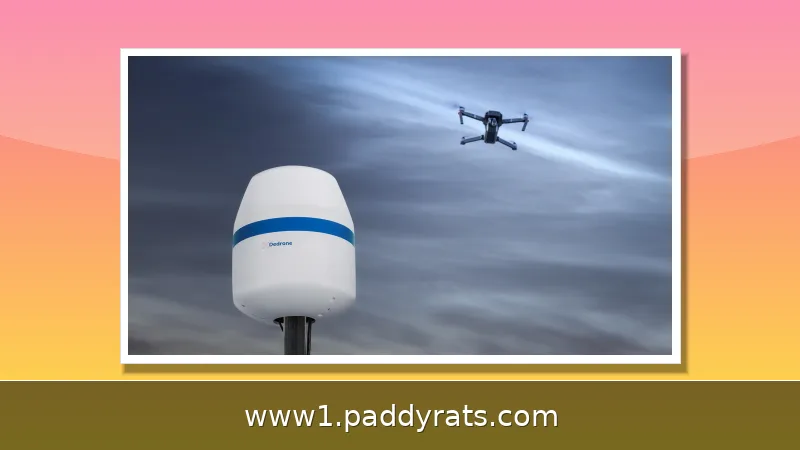
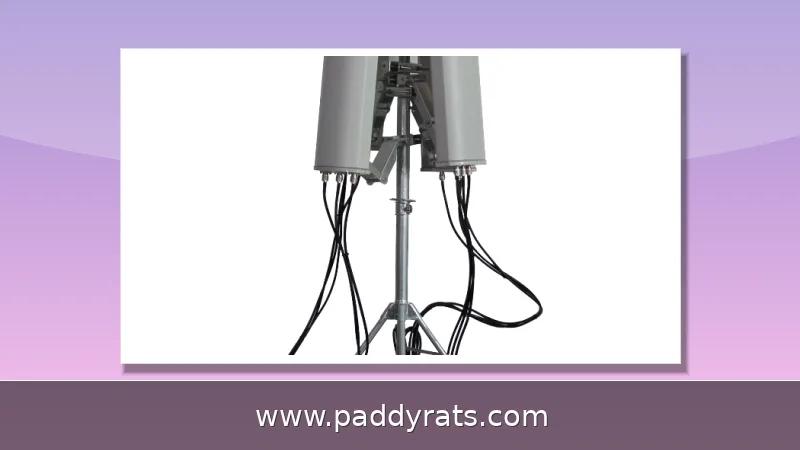
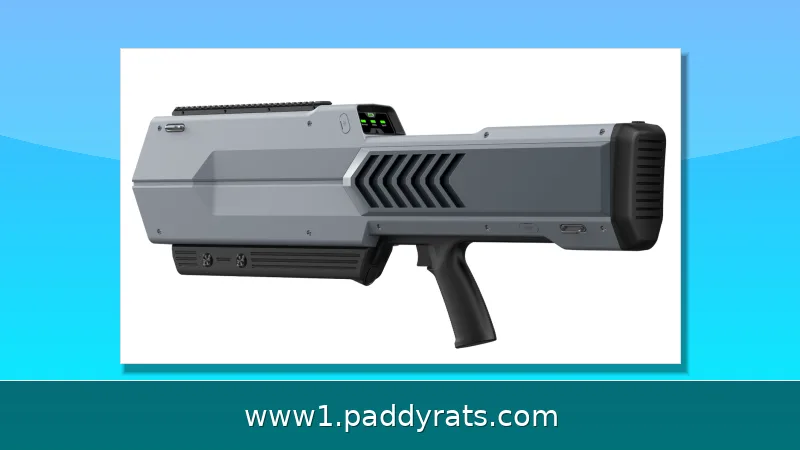
Individual coverage / form factor, power and environment plays a vital role. Mobile, multi-band four-channel jammers mounted on vehicles pick up and cover a distance of 50 to 300 meters (depending on terrain, weather and interference) making them useful for VIP convoys or roving perimeter patrols. For example, smart jamming with directional antennas can properly extend 360-degree out to roughly a distance of about:1.9 miles (approximate), and they work in tandem with what provide other airborne sensing or detection platforms that would relay location data for cueing an operators ability to direct mitigation at a confirmed track rather than blanket coverage on the area as based entirely on signal strength detections like non-smart systems generally operate by physical interception through poisonous antenna output directed back towards detected personnel without imaging intelligence from picture radar acquisition processes relaying target size identities further study needed. Common Deployment Types And Their Trade-OffsThe table below summarizes the common deployment types and their trade-offs.
| Deployment Type | Typical Coverage | Best Use | Main Trade-off |
|---|---|---|---|
| Portable jammer | Short, handheld | Rapid response, close-in protection | Limited range and power |
| Vehicle-mounted 4-channel | 50-300 m | VIP convoys, perimeter patrols | Depends on terrain and conditions |
| Stationary installation | Venue-scale, fixed | Permanent site protection | Higher power, fixed coverage |
| Smart directional system | Up to 1.9 miles, 360 degrees | Cued mitigation with detection | Cost and legal authorization |
| Omnidirectional jammer | Broad area | Maximum disruption | Highest collateral risk |
The trade-offs are not academic. When we compare links you can see that the most disruptive ones are omnidirectional jammers but they have a wider collateral effect, while targeting ones cause less disruption on nodes and require line of sight thus normalising range. They are between the middle of directional jammers and normally co-ordinated by a recognition stage. The realistic order of things when it comes to your typical venue is detection, followed by identification and only then mitigation that can be carried out however by an authorised agency who has the proper kit and legal justification. For large events such as drone shows, monitoring GNSS signal quality is also very important: jamming that degrades GPS not only affects unlicensed drones but can also impair authorized ones used by media and emergency services.
What Are the Risks and Limitations of Jamming as a Counter-UAS Measure?
The risks of jamming are real and over-weight in vendor marketing. Jamming can disrupt emergency communications, interfere with manned aircraft and knock out nearby wireless infrastructure — jamming all four primary frequencies around an airport could ground approaching craft too close to land normally. A jammed drone has uncertain responses and might crash or fall short of a safe landing, which means that whoever pushed the button could be liable. Likewise, jamming does not denote the pilot or payload, meaning an unknown operator and ambiguous intent remains even for a mitigation drone to mitigate. Factor in the legal liability, as jamming without permission is a federal felony punishable by fines and prison time, and its case for allowing professional attenuators to handle interference mitigation becomes unassailable.
How Can Event Organizers Combine Detection and Mitigation Responsibly?
The responsible model for event security is layered: detect, identify, decide, and only then mitigate through an authorized partner. Integrated platforms combine GNSS interference monitoring with drone detection to deliver real-time situational awareness, evidence collection, and coordination of authorized drones used by media and emergency services. That coordination matters at drone shows and large events, where cooperative drones are part of the production and non-cooperative drones are the threat. Vehicle-mounted jammers protect VIP convoys and adapt to changing event dynamics, but they should operate under a clear legal authority and a documented escalation process. Event organizers should also note that the FEMA C-UAS Grant Program prohibits purchasing weapons with grant funds and restricts mitigation equipment to certified law enforcement, which reinforces the same conclusion: private venues can buy detection, but jamming belongs to authorized agencies.
Jamming vs. Spoofing vs. Kinetic Capture: Which Approach Fits Which Scenario?
Choosing a counter-UAS approach is a trade-off between disruption and collateral risk. Jamming blocks communication and can preserve the drone, but it is incomplete and unpredictable. Spoofing impersonates control signals to take over or mislead a drone, which can be more precise but demands accurate knowledge of the target. Kinetic and net capture options may destroy or physically trap the drone, which resolves the immediate threat but raises safety and liability concerns over crowds. For venues, the comparison below is a useful starting point for conversations with counsel and authorized agencies.
| Approach | How It Works | Strength | Limitation |
|---|---|---|---|
| RF jamming | Overwhelms control and video links | Non-kinetic, fast to deploy | Unpredictable drone response |
| GNSS jamming | Disrupts navigation signals | Affects autonomous flight | Wide collateral impact |
| Spoofing | Sends fake position or time data | Can divert or guide a drone | Requires precise target knowledge |
| Net capture | Physically traps the aircraft | Removes the drone intact | Range and safety constraints |
| Kinetic | Projectile or interceptor | Decisive against a threat | Debris and crowd risk |
In practice, no single method covers every scenario. A drone show with cooperative aircraft needs GNSS monitoring and coordination, a stadium perimeter needs detection and identification, and a VIP movement may need mobile mitigation on standby. The common thread is that mitigation should be cued by detection, executed by authorized personnel, and documented for after-action review. Organizers who plan around those constraints end up with a safer event and a defensible legal position, even if the jammer itself stays in the hands of law enforcement rather than the venue's security contractor.
Frequently Asked Questions
How does a drone signal jammer work at an event?
A drone jammer is an RF transmitter that overwhelms the communication link between a drone and its operator by broadcasting a stronger signal on the same frequencies. This forces the drone into a fail-safe mode, so it may return to its launch point, hover, or descend, depending on how it was programmed. The response is not guaranteed and can vary by model.
Can private event security legally jam drones in the US?
Generally no. Under the Communications Act of 1934, the FCC prohibits operating, marketing, or selling RF jamming devices except for authorized government entities. Private companies and individuals are not authorized unless operating under direct federal authority, and violations carry fines up to $112,500 per incident plus potential criminal prosecution.
What frequencies do drone jammers target?
Modern jammers target multiple bands: 433 MHz and 900 MHz for control systems, 1.2 GHz and 1.5 GHz for video and telemetry, 2.4 GHz and 5.8 GHz for primary command-and-control, and GNSS bands such as GPS, GLONASS, Galileo, and BeiDou to disrupt navigation. Some systems also cover 5.2 GHz or customized FPV bands.
What coverage range can event security jammers provide?
Vehicle-mounted four-channel drone jammers can provide mobile, multi-frequency coverage of 50 to 300 meters depending on environmental conditions. Some smart jamming systems offer 360-degree coverage out to 1.9 miles with directional antennas, though legal use remains restricted to authorized agencies and trained law enforcement.