Drone jamming works by flooding the frequencies a UAV relies on, collapsing the signal-to-noise ratio until commands and position fixes can no longer be decoded. What follows depends less on the jammer than on how the aircraft was programmed to behave when its link disappears.
What Is Drone Jamming and Which Links Does It Target?
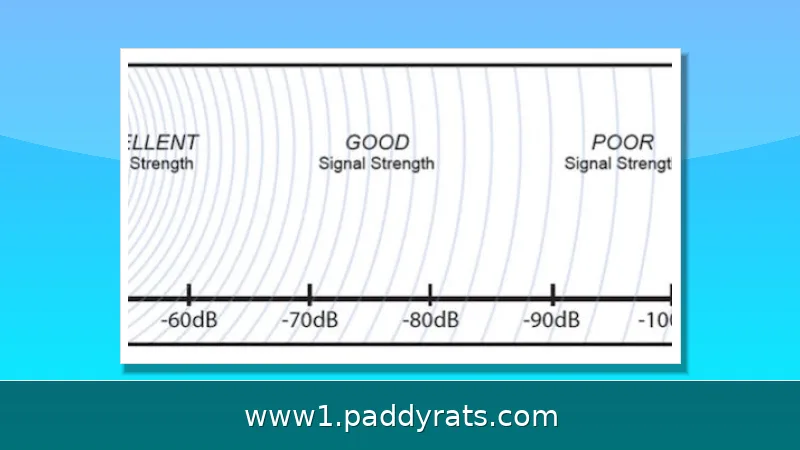
Drone jamming is a deliberate transmission of strong interference on the same frequencies an unmanned aerial vehicle uses, raising the noise floor at the receiver until the useful signal can no longer be demodulated. In my experience reviewing counter-UAS reports, the effect is rarely a clean shutdown. The receiver simply hears garbage, and the aircraft's software has to decide what that means. Background noise in the target band can climb by 30 to 60 dB, which is enough to submerge a link that was perfectly healthy a second earlier.
The targets fall into three buckets. The command-and-control uplink usually sits at 900 MHz, 2.4 GHz or 5.8 GHz. The video and telemetry downlink occupies 5.8 GHz, 2.4 GHz or 1.4 GHz. The navigation link covers GPS L1 and L2, BeiDou B1, GLONASS L1 and Galileo E1. A jammer that hits all three at once does not just stop the pilot from steering; it removes the drone's ability to know where it is, which is why link denial and positioning denial are usually discussed together.
How RF Jamming Overwhelms a UAV Control Link
Every radio link depends on a margin between the signal you want and the noise around it. Jamming attacks that margin directly. A transmitter pointed at the drone pours energy into the same band, so the receiver's automatic gain control turns down and the wanted packets fall below the demodulation threshold. The operator sees a frozen video feed, a telemetry dropout, or a control input that does nothing. This is the practical answer to how does drone jamming work: it is not hacking, and it does not need to decrypt anything. It just makes the channel unusable.
The scale of this in a real conflict is sobering. RUSI estimated in May 2023 that Ukrainian forces were losing as many as 10,000 drones per month, mainly to Russian jamming, according to figures cited by Doodle Labs. That number reflects attrition across small reconnaissance and strike airframes, not a single system failure. Jamming also does not reveal the intended flight path, locate the pilot, or identify what the drone is carrying, which is a real limitation when the payload itself is the threat.
Jamming Techniques Compared: Barrage, Spot, Sweep and Spoofing
The techniques differ in how they spend power and what they assume about the target. Barrage or broadband jamming spreads high-power noise across an entire band and is simple and blunt. Spot jamming concentrates energy on a narrow frequency such as 2.412 GHz and is far more efficient when the protocol or hopping sequence is known. Sweep jamming scans periodically, faster than a frequency-hopping dwell time, producing intermittent blocking without prior knowledge of the hop pattern. Spoofing is different in kind: it sends forged GNSS signals that mimic legitimate ones, inducing an incorrect position fix or triggering a return-to-base or yaw response.
The comparison below summarizes how each approach behaves against a modern UAV link.
| Technique | How it works | Strength | Weakness |
|---|---|---|---|
| Barrage / broadband | High-power noise across a whole band | No prior knowledge needed | Power hungry, easy to detect |
| Spot | Power on specific frequency points | Efficient with known protocol | Fails if the target hops away |
| Sweep | Periodic scanning faster than hop dwell | Works without the hop sequence | Weaker against hops above 1,000 per second |
| Spoofing | Forged GNSS or impersonated control signals | Can redirect rather than just deny | Requires accurate signal mimicry |
Newer intelligent jammers go further. A survey from Beihang University and Northeastern University researchers on arXiv describes systems that learn UAV communication behavior and flight patterns and adjust their strategy dynamically. That shifts the contest from raw power to pattern recognition, and it is why frequency agility alone is no longer a complete answer. Sensor jamming, which targets cameras, lidar or radar, and optical jamming using strong light or lasers, extend the same logic beyond radio.
What Happens After the Link Breaks: Fail-Safe Outcomes
When the command-and-control link is overwhelmed, the aircraft cannot receive operator commands, and its behavior is determined by firmware settings rather than by the jammer. Most platforms enter a fail-safe mode. Common outcomes include hovering in place until the battery depletes, returning to the recorded home point, or executing an emergency landing. A crash is possible, particularly for airframes without reliable positioning, but it is not the default. The practical result is often an operationally ineffective drone rather than a destroyed one.
That distinction matters for defenders. A drone hovering over a facility for twenty minutes is still an intrusion, and one that returns home is still recoverable intelligence for its operator. GNSS spoofing adds a stranger failure mode, because a forged position fix can send an aircraft toward terrain it believes is clear. Since the Russian invasion of Ukraine, GNSS jamming and spoofing have increased substantially across the eastern Mediterranean, Baltic Sea and Arctic regions, according to the European Union Aviation Safety Agency.
Countermeasures: Frequency Agility, INS and Anti-Jam Antennas
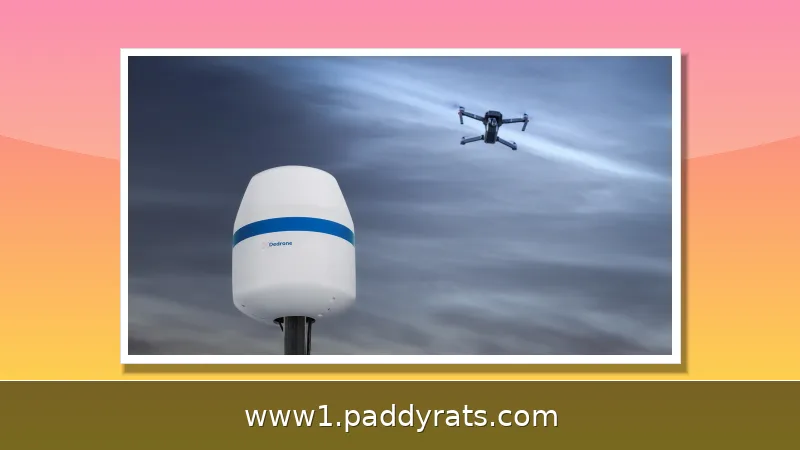
Detection comes first. A system that notices interference can switch channel or band before the link collapses. Doodle Labs' Mesh Rider Sense scans all bands and shifts automatically, and frequency hopping with randomized selection patterns and fast switching shortens the window in which a jammer can hold a channel down. Controlled Reception Pattern Antennas steer GNSS reception away from the jammer, and multi-constellation receivers using GPS, Galileo, GLONASS and BeiDou add redundancy when one signal set is degraded.
Inertial navigation is the fallback when positioning disappears. Bavovna's hybrid INS reports a 98 percent average accuracy rate even on complex trajectories, and AI sensor fusion across accelerometers, gyroscopes, compasses, cameras and lidar extends that further. The catch is drift: without GPS corrections, inertial error accumulates over time. Fiber-optic drones bypass RF entirely but are impractical for most missions because of cable cost and durability, so autonomy and onboard decision-making remain the more scalable answer.
Where Traditional Anti-Jamming Still Falls Short
None of these measures is a clean fix. CRPA antennas can be bulky and expensive, which limits them on small airframes. Inertial systems drift, and multi-constellation receivers still fail under powerful jammers that blanket the entire navigation band. Sensor fusion adds complexity, weight and cost, and it introduces new failure modes of its own. Operator training, signal anomaly detection, firmware updates and jamming-simulation exercises are cheap by comparison and often underestimated.
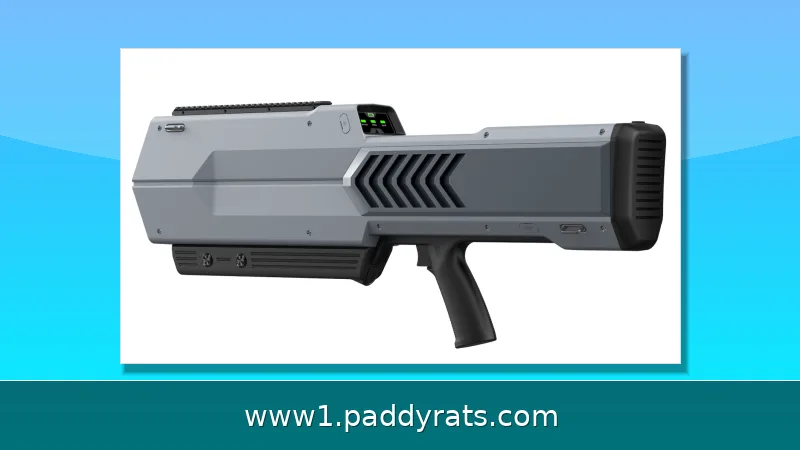
The harder problem is autonomy. Simple jamming is not effective on autonomous drones that neither receive control signals nor transmit telemetry, because there is no link to sever. That is why the counter-UAS field is moving toward detection and kinetic or directed-energy effectors rather than relying on link denial alone. Products such as Airsight's Smart and Autonomous Jammer, which provides 360-degree coverage out to 1.9 miles, address the link but cannot resolve the autonomy gap.
Legal Limits and Who Is Authorized to Jam
In the United States, the Communications Act of 1934, specifically 47 U.S.C. 301, 302a and 333, forms the backbone of jamming enforcement. The FCC prohibits operating, marketing or selling jammers, and violations carry fines up to $112,500 per incident plus potential criminal prosecution. Authorized users include the Department of Defense, DHS components such as CBP and the Secret Service, the DOJ and FBI, the Department of Energy for nuclear facilities, and the Coast Guard. Private companies, individuals and private security firms are not authorized.
The SAFER SKIES Act in the FY2026 NDAA extends authority to state and local law enforcement after training at the FBI National Counter-UAS Training Center in Huntsville, Alabama, along with correctional agencies and protection for National Special Security Events such as the FIFA World Cup 2026. In the UK, the Wireless Telegraphy Act 2006 requires an Ofcom license under Section 8(1), with no exemption for jammers and licenses granted only for justified, targeted and proportionate use, typically law enforcement, military and high-risk sectors.
The risks are not theoretical. Jammers can disrupt emergency communications, air traffic control, Wi-Fi, Bluetooth and cellular networks, and interfering with navigation signals affects surrounding GPS devices well beyond the intended target. Along the US-Mexican border, drug traffickers use jammers against border-security drones, with devices costing as little as a couple hundred dollars, according to reporting cited by BAVOVNA. Unauthorized use risks crashes, endangers lives and property, and erodes spectrum integrity for everyone nearby.
Why Drone Jamming Is an Incomplete Countermeasure
Jamming degrades a link, but it does not tell you who was flying, where they intended to go, or what the aircraft carried. For a defender deciding whether to escalate, that gap is significant. A jammed drone that returns home may be recovered and flown again; one that hovers may simply wait out the interference. Effective counter-UAS work therefore combines RF detection with radar, optical sensors and, where lawful, physical interception. The technology is improving quickly, but treating jamming as a complete answer overstates what a noise transmitter can actually accomplish.
Frequently Asked Questions
What happens to a drone when its control link is jammed?
When the command-and-control link is overwhelmed, the UAV cannot receive operator commands. Depending on its programming, it may crash, hover until the battery depletes, return to its home point, or make an emergency landing. Jamming does not always cause a crash, and many drones simply enter a fail-safe mode.
What frequencies do drone jammers target?
Jammers commonly target the 900 MHz, 2.4 GHz and 5.8 GHz control bands, plus 433 MHz, 1.2 GHz and 1.5 GHz video and telemetry links. GNSS bands such as GPS L1 and L2, BeiDou B1, GLONASS L1 and Galileo E1 are also targeted to deny positioning entirely.
What is the difference between jamming and spoofing?
Jamming blocks or overwhelms a signal so the drone loses its link or position fix. Spoofing sends counterfeit signals that mimic legitimate ones, misleading the drone about its location or letting a third party impersonate the remote control and take over the flight.
Is drone jamming legal?
In the United States, the FCC prohibits operating, marketing or selling RF jamming equipment except for authorized government entities, with fines up to $112,500 per incident. In the UK, the Wireless Telegraphy Act 2006 requires an Ofcom license, typically granted only to law enforcement, the military and high-risk sectors.