A practical annual calibration plan for spectrum sensors and analyzers, covering what gets verified, how much it costs, and how to confirm a lab's RF scope before you ship the unit out.
What does spectrum sensor calibration actually verify?
Calibration is not a label or something you can stick in the mail, it's a series of readings that proves your analyzer still tells the truth. A real run verifies frequency accuracy by reference to a GPS-disciplined or rubidium standard traceable to NIST, and amplitude accuracy (and noise) using calibrated signal generators + power meter. The lab then checks reference level accuracy, band by band displayed average noise level (DANL), resolution bandwidth (RBW) and video bandwidth (VBW) filters; attenuator and IF switching; and phase noise. If anything is out of spec it gets tuned and recorded after comparing each parameter to its published tolerance.
The reason this was important is that drift cannot be seen on screen. A reference level error produces a constant offset in all measurements so that traces still look plausible, but are uniformly wrong by some fixed amount. Small signals are buried in noise by a degraded DANL, and frequency error negligibly shifts carriers. Along with generalities, your used certificate is needed for as-found data and a measurement uncertainty budget: not just pass stamp or all the passes/failed trial plot points. With 1 dB amplitude error at 2 GHz in EMC work you never know if it can be counted!
How is spectrum analyzer calibration performed step by step?
The lab sequence is almost universal among accredited labs and it gives you a metric against which to assess the veracity of any quote. Warm up and environmental conditioning - This first stage involves 30 to 60 minutes in a room maintained at 23 ±5°C and relative humidity between (45-75%). Dead channels, stored error codes and visible DANL degradation are caught before any adjustment is attempted by a pre-calibration functional check. Throughout the span, a frequency calibration is then done at various points and if it exceeds tolerance on any point adjustments are made to its internal timebase.
From there the rest is all just amplitude work and documentation. Full range swept back using calibrated signal generator and flatness errors measured with the other parameters checked before the certificate was then issued (as-found data including uncertainty). The degradation in danl when it appears should point to input damage, aged components (equivalent age), or a Level preamp that is borderline; this finding and not quietly fixed will show up on the as-found record sheet. If you rely on low-level measurements, ask them for the raw dataa summary sheet will hide exactly what trend it is that you need to track year over year.
How often should you schedule maintenance and calibration?
Twelve months is the default interval for a spectrum analyzer, and it remains that way most of the time by teams. Calibration cycles are usually annual for production test benches, EMC pre-compliance setups and analyzers being taken back and forth across sites as they build up daily contribution to drift (silent degradation) which is typically a more costly compound process than the calibration itself even with clean as-found history. A unit that remains in its temperature controlled rack and sees only coarse power checks can be pushed further, but that's a call for evidence of as-found trends not expediency.
Vendors may have guidance that is at odds with the default of general. For those sensors, factory calibration every three years is recommended in the Spectrum Series documentation — which passes for reasonable life around a fixed monitoring node as opposed to being lab references. So in practice, the rule should be to choose the lower of both: either you follow what cycles are recommended by the manufacturer or your own risk assessment. Should you run audits, record the calibration interval in your quality procedure; this way that assessor will see a deliberate policy rather than an ad-hoc habit.
What does calibration cost and how do you choose an accredited lab?
US range pricing for spectrum analyzer calibration is typically $250 to greater than$600, scaling with frequency spread and alternatives. The top of the range includes multi-band types which add a basic accredited certificate before a further 20 to 50% is added for one with full data. Standard turnaround is typically 3–5 business days (usually standard service takes up to 5-days), and most labs offer a avg. turn-around time of about ~1 – 2 day expedite for an additional cost; some, in-house laboratories can take you overnight too within less than few hours! If the unit is on a production line, then budget an expedite fee as insurance.
| Cost and service factor | Typical US market range |
|---|---|
| Basic calibration, lower frequency range | $250–$400 |
| Multi-band microwave analyzer | $600+ |
| Accredited certificate with full data | Adds 20–50% |
| Standard turnaround | 3–5 business days |
| Expedite service | 1–2 business days at some labs |
Accreditation is not sufficient for your instrument. Since accreditation is done against a published scope, it must therefore include RF and microwave parameters up to the highest frequency of your analyzer with acceptable calibration and measurement capability (CMC). Many accredited labs have a good electrical scope, but no real RF scope and their qualification may simply not support the band that you truly care about. Namely, you will only be granted scope details by the provider itself, both in publication and via a header—an example is Techmaster Electronics which holds ANAB certificate AC-1736 under ISO/IEC 17025:2017 for four accredited US labs—but check those documents instead of looking at the certificate headers.
What routine maintenance keeps a spectrum sensor accurate?
Dust, heat and moisture are the biggest threats in-between calibration visits. Use correct cleaning devices to maintain the instrument and its connectors clean, have an eye on vents and cooling parts so that airflow is never obstructed. Preserve sensors from moisture, so that if the units are deployed outdoors or in enclosures; replace cables with proper torque and connector handling. An RF connector with contamination can place loss that will manifest as an amplitude failure, and no calibration lab is going to be able to correct a measurement issue whereby the unit returns next week.
A simple log beats memory. Record when the unit was last calibrated, what the as-found data showed, and any environmental exposure or drop event. Establish a regular schedule using appropriate calibration standards, and send the device for factory calibration on the vendor-recommended cycle where one exists. For deployed sensors, a periodic field check against a known reference catches gross failures early. If you maintain a mixed fleet, tag each unit with its next due date so nothing quietly slips past its interval.
What are common calibration pitfalls and limitations?
The first pitfall is trusting the certificate without reading the scope. A certificate that says ISO/IEC 17025 but stops at 3 GHz tells you nothing about a 26 GHz analyzer. The second is skipping the as-found record: if the lab adjusts first and reports only as-left data, you lose the evidence that would justify shortening or extending your interval. The third is treating DANL as a footnote. Degraded DANL means small signals disappear into noise, and low-level measurements lose validity without any visible warning on the display.
The fourth pitfall is assuming an uncalibrated analyzer will look broken. It usually will not. It will display signals that appear correct while being off enough to cause failed EMC tests, misidentified interference sources, or flawed RF design decisions. Reference level errors shift every on-screen measurement uniformly and are hard to spot by eye, and frequency or amplitude drift is invisible unless you compare against a traceable source. That is the core argument for keeping production, EMC, and traveling units on an annual cycle even when history looks clean.
How do you build a workable annual calibration plan?
Start with the instrument list and rank each unit by consequence of error. A bench analyzer used for pre-compliance screening goes on an annual cycle with an accredited certificate and full data. A monitoring sensor in a fixed installation can follow the manufacturer's longer factory cycle, with an annual field verification against a known reference in between. Traveling units get annual calibration plus a visual and connector inspection after each trip. Write the intervals into your quality procedure and keep the as-found reports in one place so trends are visible.
Then handle logistics. Confirm the lab's scope covers your frequency range, ask for the CMC values, and agree on turnaround before shipping. Keep a spare or a loaner for any unit on the critical path, because a 5-day standard turnaround can become two weeks with shipping and paperwork. Review the as-found data each year and adjust only with evidence. If a unit repeatedly comes back within tolerance, that is a data point; if it drifts, shorten the interval rather than hoping the next cycle is better.
Where can you learn more about spectrum analyzer calibration?
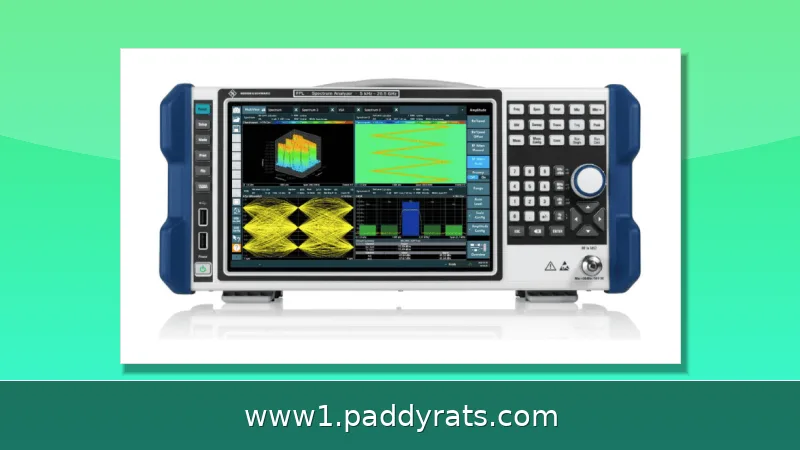
Vendor documentation and standards bodies are the most reliable starting points. Anritsu's maintenance manual for the Spectrum Master MS271xE series, Keysight's service documentation for the 8590D and Agilent 8560 E/EC lines, and Rohde & Schwarz material on the FPC cover the practical procedures and tolerances for those platforms. NIST Technical Note 2391 on noise-based power calibration for mid-band radio sensors is useful background on traceability, and ams OSRAM publishes an application note on spectral sensor calibration methods for optical sensors, which is a different problem but a good primer on reference-based calibration thinking.
For a broader walkthrough, a recorded web seminar on the basics of spectrum analyzer calibration is a reasonable use of an hour, and it pairs well with the written guides from calibration providers. The goal is not to become a metrologist but to ask better questions when you request a quote: which parameters are covered, over what frequency range, with what uncertainty, and what the as-found data will show. Those four questions separate a useful calibration from an expensive sticker.
Frequently Asked Questions
How often should a spectrum analyzer be calibrated?
Every 12 months is the typical starting interval. Units used in production test or EMC pre-compliance work, and analyzers that travel between sites, often stay on an annual cycle even with a clean as-found history because silent drift carries a high cost.
How much does spectrum analyzer calibration cost?
Market-typical US pricing runs roughly $250 to $600 or more, scaling with frequency range and options. Accredited certificates with full data add 20 to 50 percent. Multi-band microwave analyzers sit at the top of that range.
What is DANL and why does it matter in calibration?
Displayed average noise level is the analyzer's real noise floor. If DANL degrades, small signals disappear into noise and low-level measurements silently lose validity, which is why a real calibration verifies it band by band.
Can any accredited lab calibrate my spectrum analyzer?
No, accreditation follows the published scope. The lab's scope must list RF and microwave parameters covering your analyzer's frequency range with workable uncertainties, known as CMC. Always check the scope document, not just the certificate.